
Published 27 April 2026 · Last updated 25 September 2026
Why Leg Elevation and Compression Matter
Swollen legs, ankles, and feet are extremely common among older adults and people with reduced mobility. When you sit or stand for long periods without much movement, gravity causes fluid to pool in the lower limbs. Over time, this can lead to discomfort, skin changes, and more serious conditions such as venous ulcers.
Leg elevation and compression therapy are two of the most effective, non-invasive ways to manage swelling and support healthy circulation. They work in different but complementary ways and are often used together for the best results.
Leg Elevation
How It Helps
Raising your legs above the level of your heart allows gravity to help drain excess fluid from the lower limbs back into the central circulation. This reduces swelling, eases discomfort, and can help prevent skin damage caused by chronic fluid build-up.
How to Elevate Properly
- Ideally, your feet should be above your heart. Lying on a sofa or bed with your legs propped on cushions is the simplest method
- Aim for 15 to 30 minutes of elevation, 3 to 4 times a day
- Even if you cannot get your legs above heart level, any elevation is better than none
- Avoid crossing your legs while seated, as this restricts blood flow
Leg Elevation Aids
Several products can make leg elevation more comfortable and practical:
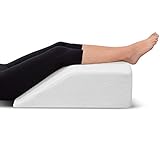
- Leg elevation cushions – wedge-shaped foam cushions designed to support the legs at the correct angle. Prices range from £15 to £60
- Adjustable leg rests – padded supports that attach to or sit alongside a chair, allowing you to elevate your legs while seated upright
- Riser recliner chairs – electric chairs with built-in leg elevation. These are a significant investment (£500 to £2,000+) but are ideal for people who need to elevate regularly throughout the day
- Bed wedges – placed under the mattress at the foot end to keep legs gently elevated while sleeping
Compression Therapy
How It Works
Compression garments apply controlled pressure to the legs, with the most pressure at the ankle gradually reducing towards the knee or thigh. This graduated pressure helps push blood upward through the veins and prevents fluid from leaking into the surrounding tissue.
Types of Compression Garments
Compression Stockings
The most common form of compression therapy. Available in different lengths (knee-high, thigh-high, and full tights) and compression classes:
- Class 1 (14-17 mmHg) – light compression for mild swelling, tired legs, and prevention during travel. Available without a prescription
- Class 2 (18-24 mmHg) – moderate compression for varicose veins, moderate swelling, and after DVT treatment. Usually prescribed by a nurse or GP
- Class 3 (25-35 mmHg) – firm compression for severe swelling, venous ulcer management, and lymphoedema. Always prescribed and fitted by a specialist
Compression Wraps
Velcro-fastened wraps that are easier to put on and take off than traditional stockings. They are particularly useful for people with limited hand strength or dexterity, or for those who find stockings uncomfortable.
Intermittent Pneumatic Compression (IPC) Devices
These are inflatable sleeves that wrap around the legs and rhythmically inflate and deflate, massaging the legs to push fluid upward. They are used in hospitals after surgery and are also available for home use on prescription or purchase. Prices range from £100 to £400.
Getting the Right Fit
Compression garments must fit correctly to be effective and safe. Poorly fitting compression can cause discomfort, skin damage, or even restrict blood flow. Key fitting points:
- Measurements should be taken first thing in the morning when swelling is at its lowest
- Ankle circumference, calf circumference, and leg length are all measured
- A trained fitter (usually a pharmacist, district nurse, or vascular specialist) should take measurements for Class 2 and Class 3 garments
- Stockings should be replaced every 3 to 6 months as they lose their elasticity
Putting On Compression Stockings
Many people struggle with putting on compression stockings due to the tight fit. Several aids can help:
- Stocking donners (also called applicators) – a frame that holds the stocking open while you slide your foot in. Prices from around £15 to £40
- Rubber gloves – wearing rubber washing-up gloves gives you better grip on the fabric
- Silk inner liners – worn underneath the stocking to reduce friction and make application easier
Who Should Not Use Compression
Compression therapy is not suitable for everyone. It should be avoided or used with caution if you have:
- Peripheral arterial disease (PAD) or significantly reduced blood flow to the legs
- Heart failure (without medical guidance)
- Skin infections, open wounds, or fragile skin on the legs
- Neuropathy that prevents you from feeling if the compression is too tight
Always consult a healthcare professional before starting compression therapy, particularly if you have diabetes or any vascular condition.
When to See a Doctor
While mild leg swelling is common and often manageable at home, you should see your GP if:
- Swelling is sudden or affects only one leg (this could indicate a DVT)
- Swelling is accompanied by redness, warmth, or pain
- You develop skin changes such as discolouration, hardening, or ulcers
- Swelling does not improve with elevation and compression
- You are breathless as well as swollen (this could indicate a heart or kidney problem)
Frequently asked questions
How high should legs be elevated?
Above the level of the heart for swelling to drain, which usually means lying down rather than sitting with feet on a stool. Sitting with the legs horizontal helps a little, but a footstool that leaves the feet below hip height does very little for swelling.
How long should I elevate for?
Commonly around twenty to thirty minutes a few times a day rather than one long session, though the right answer depends on why the legs are swelling. If swelling is new, in one leg only, or comes with pain, heat or redness, get it looked at rather than elevating and waiting.
Is elevation better than compression?
They do different jobs and often work together. Elevation uses gravity to drain fluid, compression stops it collecting again while you are upright. Compression should not be used at all where there is arterial disease, so the order is assessment first, compression second.
Are wedge pillows better than stacked cushions?
Yes, because a wedge keeps the leg supported along its length instead of putting a pressure point behind one spot. A cushion under the heels alone concentrates pressure exactly where pressure damage starts, which is why nursing practice is to support the whole calf and keep the heels clear.
When is leg swelling a medical emergency?
Sudden swelling in one leg with pain, warmth or redness can indicate a clot and needs same day assessment. Swelling with breathlessness or chest pain needs emergency help. Gradual swelling in both legs is usually less urgent but still worth a GP appointment.
Does elevating legs help with restless legs or cramps?
There is no good evidence that it treats either. It may make you more comfortable, which is worth something, but if cramps or restlessness are disturbing sleep regularly that is worth investigating rather than managing with a pillow.
Sources & Useful Resources
Official Resources
- NHS: Swollen Ankles, Feet and Legs (Oedema) – self-help measures and when to seek treatment
- NHS: Lymphoedema – causes, symptoms, and compression treatment
Charity & Advisory Resources
- Lymphoedema Support Network – the UK national patient support charity
- Macmillan: Compression Treatment for Lymphoedema
Product Comparisons
- The Leg-Care Co – UK retailer specialising in compression stockings and hosiery
Helpful Videos
Some links in this section are affiliate links. If you buy through one we earn a commission from Amazon at no extra cost to you, and as an Amazon Associate we earn from qualifying purchases. It does not change what we recommend. This is not medical advice.



As an Amazon Associate I earn from qualifying purchases. (paid link)
Published 27 April 2026 · Last updated 25 September 2026