

Published 27 April 2026 · Last updated 25 September 2026
Quick answer: The best tracker is the one the person will actually carry or wear. Watch-style trackers are harder to leave behind, while pocket trackers and pendants are less noticeable. For live location, choose a GPS tracker with its own SIM and an SOS button. A Bluetooth tag only updates when a nearby phone passes it, so it is a backup rather than a safety device. Agree the plan with the person wherever possible, and respect their privacy and wishes.
Why GPS tracking can help
Wandering is one of the most common and dangerous behaviours associated with dementia. Around 60% of people with dementia will wander at some point, often becoming disoriented and unable to find their way home. In cold weather or busy traffic, this can quickly become a life-threatening situation.
A GPS tracker allows carers and family members to locate a person with dementia quickly if they go missing. Many devices also include features such as safe zone alerts, SOS buttons, and two-way calling, which provide an extra layer of safety without restricting the person’s independence unnecessarily.
Types of GPS trackers
GPS Watches
A GPS watch looks and feels like a normal wristwatch. This makes it the most discreet option. The person wears it throughout the day, and it continuously tracks their location. Many GPS watches include:
- Real-time location tracking via a smartphone app
- SOS button for emergencies
- Geo-fencing (alerts when the wearer leaves a defined safe area)
- Two-way voice calling
- Step counter and heart rate monitoring (on some models)
GPS watches are a good choice for people in the early to moderate stages of dementia who are used to wearing a watch.
GPS pendants and keyfobs
These are small devices worn around the neck or attached to a keyring. They are simpler than watches and typically have just an SOS button and location tracking. They suit people who do not like wearing a watch or who might fiddle with and remove a watch-style device.
GPS shoe insoles
GPS insoles fit inside shoes and track the wearer’s location without them needing to remember to put on or carry a separate device. This is particularly useful for people in later stages of dementia who may remove wearable devices. The downside is that they only track when the person is wearing those specific shoes.
Clip-On and pocket trackers
Small GPS units that can be clipped to a belt, placed in a pocket, or sewn into clothing. These offer flexibility but carry a higher risk of being lost or left behind.
Key features to look for
- Real-time tracking with frequent location updates (every 1 to 5 minutes when moving)
- Geo-fencing that sends alerts when the person leaves or enters set zones
- SOS button that the person can press if they feel lost or frightened
- Long battery life – at least 24 hours, ideally 2 to 5 days between charges
- Waterproof rating so it can be worn in the rain or shower
- Comfortable and familiar design that the person will not want to remove
- Easy charging with a magnetic or cradle charger rather than fiddly cables
- Fall detection on some models, which automatically alerts carers
- Location history so you can see patterns and identify concerning changes in routine
Costs
GPS trackers for dementia typically involve two costs: the device itself and an ongoing subscription for the mobile data and tracking service.
- Device cost: £50 to £250, depending on features and brand
- Monthly subscription: £5 to £25 per month for the SIM card and tracking platform
- Some providers bundle both into a single monthly payment of £15 to £35
Ethical Considerations
Using a GPS tracker to monitor someone with dementia raises important ethical questions about privacy, consent, and autonomy. It is important to consider these carefully:
- Involve the person in the decision as early as possible, ideally while they still have capacity to understand and agree
- Frame it positively as a safety tool that allows more freedom, not a surveillance device
- Use the least restrictive option that meets the safety need
- Record the decision and your reasons, particularly if the person lacks capacity to consent. Consider consulting other family members or a healthcare professional
- Review regularly whether the tracker is still appropriate as the person’s condition changes
The Mental Capacity Act 2005 (in England and Wales) requires that any decision made on behalf of someone who lacks capacity must be in their best interests. Using a GPS tracker to prevent a vulnerable person from coming to harm is generally considered a proportionate and reasonable measure.
Where to get help
Your local council’s adult social care team or the Alzheimer’s Society can advise on GPS trackers and other assistive technology for people with dementia. Some councils include GPS trackers as part of their telecare service, which may reduce the cost.
We only recommend products we think are worth it. Some links on this page are affiliate links: if you buy through one we earn a commission from Amazon, at no extra cost to you, and as an Amazon Associate we earn from qualifying purchases. It never changes which products we pick or how we rank them. This is not medical advice. If you are unsure what you need, ask your GP or occupational therapist.
GPS trackers you can buy on Amazon today
Before anything else, one distinction decides whether a tracker will work for you, and the listings do their best to hide it.
A true GPS tracker has its own SIM card and reports its position over the mobile network from anywhere with signal. It needs charging, usually every few days, and it normally carries a small monthly or annual data cost.
A Bluetooth tag, the AirTag style of device, has no GPS and no SIM. It only knows where it is when somebody else’s phone passes close enough to hear it and report the location back. In a busy town that works surprisingly well. On a quiet lane, in a field, or in the small hours, it can be hours out of date or silent altogether. Tags cost a fraction of the price and the battery lasts about a year, which is why so many families choose one, and why so many are disappointed the first time it matters.
The honest rule: if the risk you are managing is someone leaving the house and not coming back, buy a real GPS device. If the risk is misplacing a handbag or a coat indoors, a tag is the right tool and the cheaper one.
We have not tested these devices. The table shows what is listed on Amazon UK now, with live prices.




As an Amazon Associate I earn from qualifying purchases. (paid link)
Best overall: UBEE SAFE 4G GPS tracker watch for dementia
A watch sold specifically for dementia and Alzheimer’s rather than repurposed from the children’s market, running on 4G so it reports position from anywhere with a mobile signal. A wrist worn device is also the hardest one to leave behind on the hall table, which is the failure mode that defeats most pocket trackers.
The catch: it needs a SIM and charging every few days, and a watch only works if the person will keep wearing it. If they already take their watch off at night and forget it in the morning, spend the money elsewhere. Around £70.
| Photo | Title | Price | Buy |
|---|---|---|---|
|
| UBEE SAFE 4G GPS Tracker Watch for Dementia & Alzheimer - Live Tracking Dementia Tracker for Elderly with SOS Alerts & 2 Way Calling - Geo-Fence Alerts, Waterproof Design, 700mAH Battery - UK Support |
|
As an Amazon Associate I earn from qualifying purchases. (paid link)
Best pocket tracker: PAJ Mini GPS 4G
PAJ is an established European tracker maker rather than an unbranded import, and this unit is small enough to live in a coat pocket, a handbag or a walking stick bag. Useful when a wrist device has already been refused.
The catch: anything that goes in a pocket can be moved to a different coat, and a tracker in the wrong coat is worse than no tracker because you will trust it. Pair it with one specific garment the person always wears. Around £47.
| Photo | Title | Price | Buy |
|---|---|---|---|
|
| PAJ Mini GPS Tracker 4G for Elderly, Kids & Dementia Care | £39.99 |
|
As an Amazon Associate I earn from qualifying purchases. (paid link)
Best cheap option for an iPhone family: Apple AirTag
If everyone in the family uses an iPhone, an AirTag is the cheapest way to find a bag, a set of keys or a coat, and the battery lasts about a year with no subscription at all.
The catch: this is not a GPS tracker and should not be relied on to find a person. It reports a location only when an Apple device passes nearby, so its usefulness collapses exactly where you need it most, on a quiet road at night. Around £25.
| Photo | Title | Price | Buy |
|---|---|---|---|
|
| Apple AirTag (2nd generation): Tracker for Keychain, Wallet and More; Locator with Sound; Simple One-Tap Setup with iPhone or iPad; Key Finder with up to 1.5x Precision Finding Range | £29.00 |
|
As an Amazon Associate I earn from qualifying purchases. (paid link)
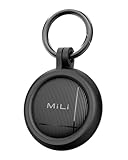
Best tag for a mixed phone household: MiLi LiTag Duo
Works with both the Apple and the Google finding networks, which matters in the common situation where one relative has an iPhone and another has an Android phone. Same one year battery, same low price.
The catch: the same Bluetooth limitation applies. It is a finder for objects, not a safety device for a person. Around £16.
| Photo | Title | Price | Buy |
|---|---|---|---|
|
| MiLi LiTag Duo Tracker Tag with Keychain for iOS & Android | £7.98 |
|
As an Amazon Associate I earn from qualifying purchases. (paid link)
Best if you need alerting as well as location: fall alarm watch with SOS and GPS
Combines location with an SOS button, two way voice and fall detection. Worth the extra money where the concern is where the person is, and whether they have come to harm while they are there.
The catch: the most expensive option here, and every extra feature is another thing to explain to somebody whose memory is already unreliable. Around £130.
| Photo | Title | Price | Buy |
|---|---|---|---|
|
| Fall Alarm Watch for Elderly and Dementia With SOS Button and 2-way Voice Calling – Dedicated UK App for Family Peace Of Mind (4g) | £129.99 |
|
As an Amazon Associate I earn from qualifying purchases. (paid link)
Frequently asked questions
Is it legal to track someone with dementia without telling them?
It depends on whether they can make the decision themselves. If the person has capacity, they should agree to it. If they do not, the Mental Capacity Act 2005 requires anyone acting on their behalf to make a best interests decision, involving family and professionals, and to choose the least restrictive option that keeps them safe. Covert tracking, for example a device hidden in a shoe, is the most restrictive end of that scale and should be discussed with the person’s GP or social worker rather than decided alone.
What is the Herbert Protocol?
It is a form you fill in ahead of time with a photograph and the details police would need if the person went missing, including places they might head for and the routes they used to walk. Most UK police forces offer it. It costs nothing, it works whether or not you buy a tracker, and it is the single most useful thing a family can do before an incident happens.
Do GPS trackers need a monthly subscription?
Most true GPS trackers need a SIM, so there is usually a data cost, sometimes bundled as an annual fee and sometimes a monthly plan. Bluetooth tags need no subscription at all because they use other people’s phones rather than a mobile network of their own. Check which one you are buying before assuming the price on the listing is the whole price.
How accurate is a GPS tracker?
Outdoors with a clear view of the sky, usually within a few metres. Indoors, in a multi storey building or among tall buildings, considerably worse, and some devices fall back to reporting the nearest mobile mast, which can be hundreds of metres out. Treat the map as a starting point for a search, not an exact position.
Will a tracker stop someone getting lost?
No. It shortens the time between someone going missing and being found, which matters a great deal, particularly in cold weather. It does not prevent the walk out of the door. Door sensors, a Herbert Protocol form and telling neighbours all work alongside it.
What happens if the battery dies?
The tracker stops reporting and the last known position is all you have. This is the most common real world failure, so pick a device whose charging fits the household routine, put the charger somewhere it will be seen, and choose a model that warns you when the battery is low.
Sources & useful resources
Official Resources
Charity & advisory resources
Product Comparisons
Published 27 April 2026 · Last updated 25 September 2026