
Published 27 April 2026 · Last updated 22 October 2026
Links to Amazon on this page are paid links: we earn a commission if you buy, at no extra cost to you. No company paid to appear here. How we make money.
| Photo | Title | Price | Buy |
|---|---|---|---|
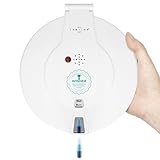
| TabTime Automatic Pill Dispenser - 6 Daily Alarms, Solid Locking Lid | 6 daily alarms with locking lid. Electronic medication dispenser for the elderly, dementia, Alzheimer's & Parkinson's | £69.99 |

|
As an Amazon Associate I earn from qualifying purchases. (paid link)
Why Medication Management Matters
Missing doses, doubling up, or taking medication at the wrong time is extremely common among older adults, particularly those managing multiple prescriptions. The NHS estimates that between 30-50% of medicines prescribed for long-term conditions are not taken as intended. Poor medication adherence leads to worsening health, hospital admissions, and wasted medicine costing the NHS around £300 million per year. A good pill dispenser or medication reminder can solve this problem simply and affordably.
Types of Pill Dispenser
Weekly pill boxes: Simple plastic boxes with compartments for each day and time slot (morning, noon, evening, bedtime). They cost £3-15 and are the most basic option. You or a carer fill them once a week. Limitations include no reminders if you forget to open them, and they can be confusing for people with dementia.
Automatic pill dispensers: Electronic devices that release the correct dose at pre-set times, usually with an alarm. The Pivotell Advance and TabTimer are popular UK models. They lock so the user cannot access doses ahead of time, reducing the risk of double-dosing. Prices range from £60-200.
Monitored dosage systems (blister packs): Your pharmacy pre-packs your medication into sealed compartments labelled by date and time. You simply pop out the right blister at the right time. Most UK pharmacies offer this service free of charge. Ask your local pharmacist about a Medicines Use Review (MUR) and dosette box service.
Smart dispensers with alerts: Connected devices that send notifications to a carer’s phone if a dose is missed. The Pivotell Advance with GSM module, MedMinder, and TabSafe are examples. These provide peace of mind for family members who do not live nearby. Monthly monitoring fees may apply (£5-20/month).
Medication Reminder Apps and Devices
If you just need a reminder rather than a full dispenser, smartphone apps like Medisafe, MyTherapy, and the NHS App can send alerts at pill times. For people who do not use smartphones, simple plug-in alarm clocks with multiple daily alarms, vibrating watches, or talking reminder devices can work well. Amazon Alexa and Google Home can also be set up with recurring medication reminders using routines.
Choosing the Right Solution
For someone who is generally capable but occasionally forgets: a weekly pill box plus phone alarm is usually sufficient. For someone with early-stage dementia or multiple medications: an automatic dispenser with alarm provides structure and safety. For someone living alone with dementia or cognitive issues: a smart dispenser with carer alerts, combined with a pharmacy blister pack service, offers the most full safety net.
Getting Help with Costs
Basic pill boxes are very affordable, but automatic dispensers can be costly. Some local council telecare services include medication dispensers as part of their package (typically £4-8 per week alongside a pendant alarm). Charitable organisations like the Alzheimer’s Society and local carers’ centres may also provide or subsidise dispensers. Pharmacy blister pack services are free on the NHS.
Frequently asked questions
Do automatic pill dispensers need a subscription?
Only the monitored ones. A basic locked dispenser with a timer and an alarm is a one off purchase. Monitored systems that alert a relative or a call centre when a dose is missed carry an ongoing fee, and that is the feature worth paying for if nobody is in the house.
Is a dispenser better than a pharmacy blister pack?
They solve different problems. A blister pack, arranged by your pharmacy, solves the question of what to take and when. A dispenser solves the question of remembering to take it at all, and locks away the rest so a dose cannot be doubled. Many people benefit from both.
Can I get a blister pack free from my pharmacy?
Ask your pharmacy. Where a pharmacy provides medicines in a compliance aid as a reasonable adjustment there is usually no charge, though it is not an automatic entitlement and practice varies. A medication review with the GP or pharmacist is worth asking for at the same time.
Are these suitable for someone with dementia?
Up to a point. A locked timed dispenser helps in the early and middle stages where the person will still respond to an alarm and take what is presented. It does not help once somebody no longer understands what the alarm means, and at that stage the honest answer is supervision rather than a device.
What happens in a power cut?
Most dispensers run on batteries or have a battery backup, but not all, and a dispenser that has lost its schedule is worse than no dispenser because it is trusted. Check the backup arrangement, and check the batteries on a routine, not when it fails.
Can they handle liquids, inhalers or fridge medicines?
No. Dispensers hold tablets and capsules only. Anything liquid, injected, inhaled or refrigerated has to be managed separately, which is worth planning for rather than discovering later, since a dispenser can create false confidence that everything is covered.
Sources & Useful Resources
- NHS Prescriptions and Pharmacy Services
- Alzheimer’s Society Medication Advice
- Age UK Independent Living
Published 27 April 2026 · Last updated 22 October 2026