
Published 27 April 2026 · Last updated 30 September 2026
Want a ranking? See the 10 best riser recliner chairs, checked against their makers’ own documents: weight limits, space behind, power-cut back-up and warranty, compared.
What Is a Riser Recliner Chair?
A riser recliner (also called a rise-and-recline chair) is a motorised armchair that tilts forward to help you stand up and reclines backward for resting. At the touch of a button, the chair gently lifts and tilts you to a near-standing position, reducing strain on your knees, hips, and back. For people who struggle to get out of a standard armchair, a riser recliner can be life-changing, restoring independence and reducing the need for someone to help you up.
Some links in this section are affiliate links. If you buy through one we earn a commission from Amazon at no extra cost to you, and as an Amazon Associate we earn from qualifying purchases. It does not change what we recommend. This is not medical advice.

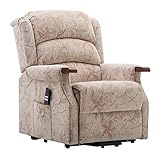



As an Amazon Associate I earn from qualifying purchases. (paid link)
Single Motor vs Dual Motor
Single motor chairs use one motor to control both the backrest and the footrest together. When the back reclines, the footrest rises simultaneously. These are simpler, cheaper, and perfectly adequate for most people. Prices start from around £400-600.
Dual motor chairs have separate motors for the backrest and footrest, letting you adjust each independently. This means you can sit upright with your feet elevated (great for circulation and swollen ankles) or recline the back without raising your feet. Dual motor chairs cost £600-1,200+ but offer significantly more flexibility.
Getting the Right Size
Correct sizing is important for both comfort and safety. A chair that is too big will not support you properly, and one that is too small will be uncomfortable. Measure your seat depth (back of the knee to the back of the buttock), seat width (across the widest part of your hips plus 3-5cm), and floor-to-knee height (your feet should rest flat on the floor when seated). Most manufacturers offer petite, standard, and tall size options.
Upholstery Options
Fabric: Warm, breathable, and available in the widest range of colours and patterns. Good for general use but harder to clean if spills occur. Look for stain-resistant treated fabrics.
Faux leather (PU/PVC): Easy to wipe clean. This makes it ideal for people with incontinence concerns. It can feel cold initially and may crack over time with heavy use.
Waterproof/wipe-clean fabric: A good compromise, combining the look and warmth of fabric with easy-clean properties. Brands like Aquaclean and SmartWeave offer fabrics that can be cleaned with just water.
Useful Features to Look For
Heat and massage: Some chairs include built-in lumbar heating and vibration massage. While not medical-grade, they can provide comfort for back pain and muscle stiffness.
Battery backup: Ensures the chair can return to the upright position during a power cut, so you are never stuck in a reclined position.
Pressure-relief cushion: Memory foam or gel cushions built into the seat reduce the risk of pressure sores for people who sit for extended periods.
Side pockets and USB charging: Handy for keeping a remote, phone, or reading glasses within reach.
How Much Do Riser Recliners Cost?
Entry-level single motor chairs start from £400-600. Mid-range dual motor models cost £700-1,200. Premium British-made chairs from manufacturers like HSL, Willowbrook, and Sherborne range from £1,200-3,000+. Remember that riser recliners qualify for VAT exemption if you have a qualifying health condition, saving 20% on the purchase price.
Getting Help with the Cost
Some local councils provide riser recliner chairs through their community equipment service following an occupational therapy assessment, though availability varies widely. Charitable grants from organisations like the Family Fund (for families with disabled children), Turn2us, and local benevolent funds may help with the cost. Some retailers offer interest-free credit or payment plans. The Motability Scheme does not cover furniture, but your Attendance Allowance or PIP daily living component can help fund ongoing costs.
Choosing for hip or knee arthritis? Our guide to riser recliner chairs for osteoarthritis shows how to measure yourself and compares the seat heights of 11 UK chairs.
Frequently asked questions
Single motor or dual motor?
A single motor moves the back and the footrest together on a fixed path. A dual motor moves them independently, so you can raise your legs without lying back. Dual motor is the better choice for anyone who needs their legs up but has to stay upright, which includes many people with breathing or reflux problems.
How do I get the size right?
Measure three things: floor to the back of the knee for seat height, the back of the knee to the base of the spine for seat depth, and the width across the hips. A chair that is too deep is the commonest sizing mistake, because it pushes the person forward and removes the back support entirely.
Do I pay VAT on a riser recliner?
Not if you are eligible for VAT relief through a chronic illness or disability, and the declaration is made at the point of purchase. This is why a specialist chair can work out closer to a high street recliner than the headline price suggests. VAT cannot be reclaimed afterwards.
What happens in a power cut?
Most riser recliners have a battery backup that will return the chair to a safe position once, which is enough to get somebody out but not enough to keep using it. Check the backup exists before buying, particularly if the person cannot get out of the chair unaided.
Is a riser recliner suitable for all day sitting?
No chair is. Pressure damage comes from staying in one position, so somebody who sits all day needs to change position regularly and may need a pressure relieving cushion. If a person is sleeping in the chair every night, that is usually a sign the bed situation needs looking at rather than the chair.
Can I get one funded?
Rarely as a straight purchase, but occupational therapy assessment can lead to equipment provision in some circumstances, and some charities help with the cost. It is worth asking before buying, because an assessment also catches the cases where the real answer is a different chair or a profiling bed.
Sources & Useful Resources
- NHS Home Equipment and Adaptations
- Which? Riser Recliner Buying Guide
- Disabled Living Foundation
- GOV.UK VAT Relief
Helpful Videos
Published 27 April 2026 · Last updated 30 September 2026