
Published 4 June 2026 · Last updated 25 September 2026
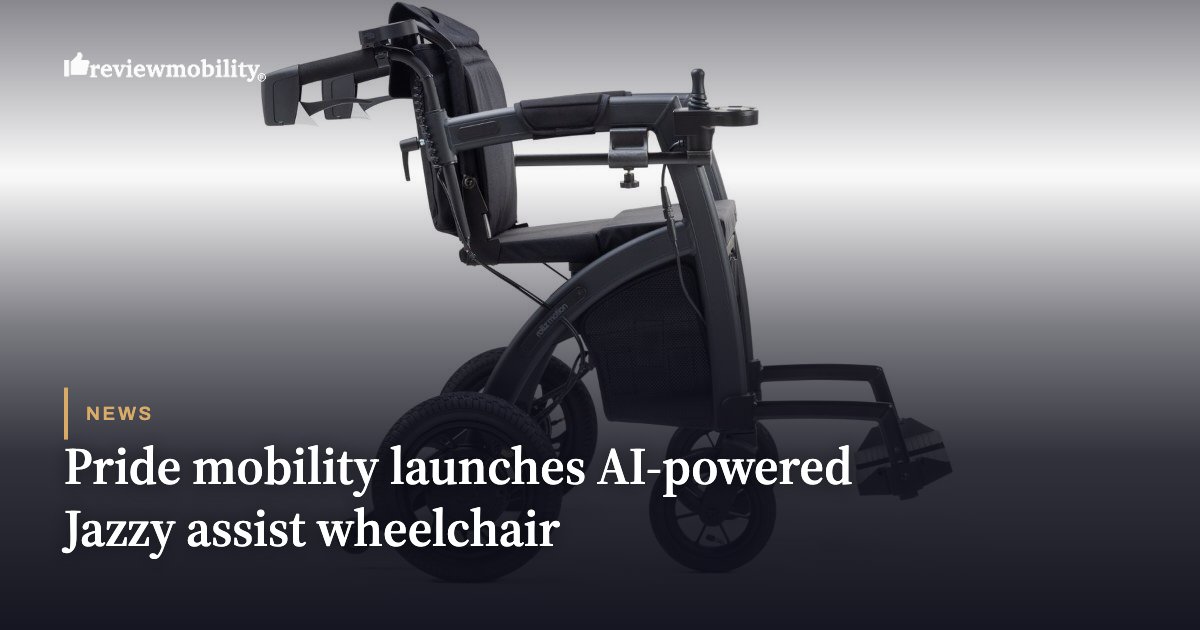
Pride Mobility has unveiled the Jazzy Assist, a powered wheelchair that integrates artificial intelligence to provide real-time navigation assistance, obstacle detection, and adaptive driving support. The Jazzy Assist represents a significant step forward in powered wheelchair technology, bringing features previously seen only in autonomous vehicle research into a consumer mobility product.
The AI system built into the Jazzy Assist uses a combination of sensors, cameras, and machine learning algorithms to monitor the wheelchair’s surroundings continuously. When the system detects an obstacle, such as a kerb, doorframe, or piece of furniture, it can automatically adjust the chair’s speed and trajectory to avoid a collision. For users with limited hand dexterity, tremors, or cognitive impairments, this assistance layer can make the difference between confident independent movement and relying on a carer to navigate tight spaces.
According to the Pride Mobility UK news page, the Jazzy Assist also features an intelligent drive mode that adapts the chair’s responsiveness to the user’s driving patterns over time. If the system detects that a user consistently struggles with a particular type of manoeuvre, it can offer more assistance in those situations while allowing full manual control in others. This adaptive approach means the chair becomes more personalised the longer it is used.
Traditional powered wheelchairs rely entirely on the user’s joystick input, with no awareness of the surrounding environment. While this gives experienced users full control, it can present challenges in crowded or unfamiliar environments. The Jazzy Assist does not remove user control but instead acts as a co-pilot, intervening only when its sensors detect an imminent risk. Users can override the AI at any time, and the system can be adjusted or switched off entirely if preferred.
The potential impact in care settings is considerable. In residential care homes and hospitals, wheelchair collisions with walls, door frames, and furniture are common and can cause injury to both the user and others. An AI-assisted wheelchair that can help prevent these incidents could reduce accident rates and give care staff greater confidence in supporting residents’ independent mobility. It could also enable some users who are currently deemed unable to safely operate a standard powered wheelchair to regain that independence.
The Jazzy Assist is part of a broader wave of smart mobility innovation. Several manufacturers are exploring similar technologies, including GPS-enabled navigation for outdoor use, voice-controlled driving, and integration with smart home systems that allow a wheelchair to automatically navigate to different rooms on command. As these technologies mature, the cost is expected to come down, making AI-assisted mobility more accessible. For now, the cost of advanced powered wheelchairs remains a significant consideration, with prices for high-specification models typically starting at several thousand pounds.
Anyone considering a powered wheelchair, whether AI-assisted or traditional, should seek a professional assessment to ensure the chair meets their specific needs. Local mobility aids suppliers can provide demonstrations and advice on the most suitable options.
Related guides on Review Mobility
- Wheelchairs: powered and manual options
- How much do wheelchairs cost?
- Guide to mobility aids
- Find a mobility equipment company near you
Published 4 June 2026 · Last updated 25 September 2026