
Published 13 August 2026 · Last updated 21 October 2026
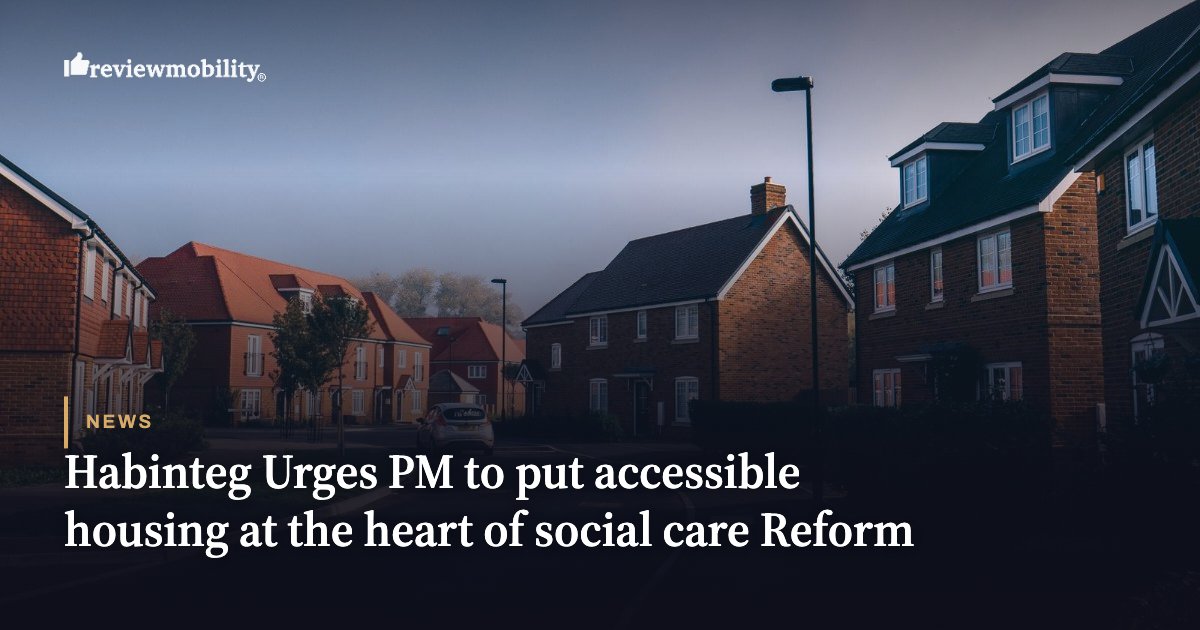
Housing charity Habinteg has called on Prime Minister Andy Burnham to make accessible housing a central plank of his adult social care reforms, arguing that the government’s plans will not deliver on their promise unless the homes people live in are designed to support care in the first place.
Responding to last week’s announcement on social care reform, Habinteg Housing Association chief executive Martin Warhust said the charity “strongly welcomes” the pledge to fix the system, but warned that a preventative approach to care cannot work in isolation from housing policy. “Andy Burnham’s vision for adult social care centres on proactive, preventative measures, to help people lead longer lives, in better health, while reducing the pressure on social care services and the NHS,” he said. “Reforms that are aimed at long-term transformation could make a big impact on the lives of older and disabled people but for this to work, it is critical to include housing in the equation.”
Why housing design affects care costs
Habinteg’s argument is essentially an economic one. Homes built to accessible and adaptable standards help disabled and older people avoid unwanted and costly moves into residential care, and they typically require less complex packages of home care support. Because the design anticipates changing needs, they also need fewer and less intrusive adaptations later on, which reduces the draw on council social care and adaptations budgets.
The charity points to its own 2023 research, which identified a substantial cost benefit for building new fully wheelchair accessible homes for households that need them. That study found the savings and wider benefits outweigh the additional build cost within a few years. Habinteg has also cited figures suggesting a household in a basic M4(1) “visitable” home could be almost £27,000 worse off over time than one in an accessible and adaptable M4(2) property, once the cost of retrofitting is taken into account.
That gap is familiar to anyone who has paid for adaptations privately. Retrofitting a level access shower, widening a doorway or fitting a stairlift into a house that was never designed for it is almost always more expensive and more disruptive than building the capacity in from the start. Our own stairlift cost research shows curved and bespoke installations, which are often driven by awkward staircases in older housing stock, can cost several times more than a straight rail fitted to a standard flight.
The M4(2) and M4(3) ask
Habinteg co-chairs the Housing Made for Everyone (HoME) coalition, and its specific policy asks are unchanged. It wants Building Regulations amended so that the M4(2) accessible and adaptable standard becomes the minimum requirement for all new-build homes in England, rather than an optional standard applied at local discretion. It also wants every Local Plan to state an evidenced policy on M4(3) wheelchair user homes, with a nationally applicable minimum target for local planning authorities that do not set their own.
The coalition has previously warned that a draft National Planning Policy Framework proposal to require only a proportion of new homes to meet M4(2) risks “building the care crisis of tomorrow”. Warhust framed the consequences in blunt terms: “Inaccessible homes limit independence, raise the risk of trips and falls, can lead to social isolation, and increase the likelihood of unemployment. These factors often create poorer health and higher levels of poverty for people in every region, inevitably increasing the burden on the public purse.”
What it means for households now
For the millions of people living in homes that were built to older standards, the practical route to a safer home remains adaptation rather than new build. The Disabled Facilities Grant, worth up to £30,000 in England, continues to fund stairlifts, ramps, level access showers, home lifts and ceiling track hoists through local councils. Smaller changes to bathroom mobility and everyday daily living aids are often funded or supplied directly by adult social care after an occupational therapy assessment.
Habinteg’s closing message to the Prime Minister was that the two agendas need to move together. “Taking a preventive, long term and inter-departmental approach will strengthen his ability to deliver real lasting improvements in social care for all,” Warhust said.
Sources: THIIS Magazine, Habinteg #ForAccessibleHomes, House of Commons Library briefing on Disabled Facilities Grants
Related guides on Review Mobility
- How much does a stairlift cost in 2026?
- Bathroom mobility: showers, baths and grab rails
- Home lifts explained
- Find a mobility company near you
Published 13 August 2026 · Last updated 21 October 2026