
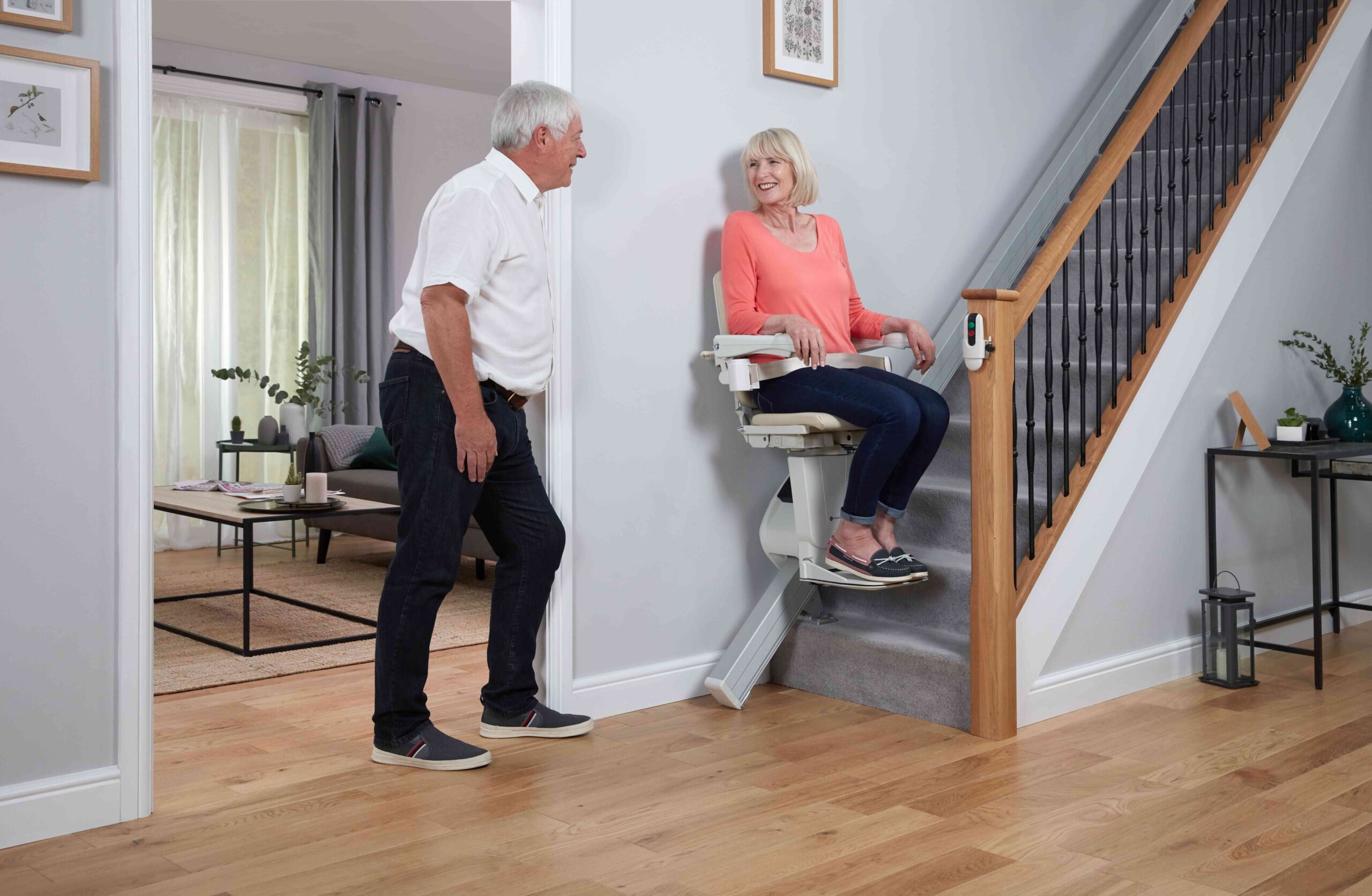
Selling a Stairlift
Yes, you can sell your stairlift. A straight stairlift in good working order typically fetches £100 to £400 from a dealer, who will refurbish and resell it. Private sales can bring in more, but you will need to arrange safe removal. Curved stairlifts are much harder to sell because the rail is custom-made for your staircase, so most owners arrange removal instead. Tell us about your lift using the form below and we will connect you with buyers.
The honest answer on what a used stairlift is worth
Most people arrive at this page expecting a number and hoping it is a big one. Here is the realistic picture before you spend time on it.
A reconditioned straight stairlift sells to the public for roughly £1,000 to £2,000 installed. Out of that the reconditioner has to remove your lift, strip and test it, replace the batteries and worn parts, store it, cut the rail to fit a different staircase, install it, and warrant it. What is left to offer a private seller is a small fraction of the retail price — and for many lifts the offer is simply free removal rather than cash.
That is not a reason to give up. Free removal is worth £200 to £500 to you, which is a real saving even when no money changes hands. It is a reason to judge offers against what removal would otherwise cost you, rather than against what a new lift costs.
Straight lifts sell. Curved ones usually do not.
This is the single fact that decides whether you have something to sell.
A straight rail is a standard extruded section that can be cut down to fit another staircase, so a straight lift can be re-used almost anywhere. A curved rail is manufactured to the measurements of one specific staircase — its turns, its pitch, its landing. It will not fit another house, and it cannot be economically re-bent. Only the carriage and motor carry any value, which is rarely enough to justify anyone’s time.
So if your lift is curved, plan for a paid removal and treat any offer as a bonus. If it is straight, read on.
What actually affects the price you are offered
- Brand. Recognised UK brands with available spare parts are worth having. An unbranded import, or a brand that has left the market, is worth very little because nobody can service it.
- Age. Most buyers draw a line somewhere around ten years. Beyond that the electronics and the rail wear become the buyer’s problem.
- Working order. A lift that runs up and down when the buyer visits is worth more than one that “worked when we last used it”. If yours has been sitting idle, charge it and run it before anyone comes.
- Rail length. A rail can be shortened but not extended, so a long straight rail suits more staircases than a short one and is worth more.
- Service history. Paperwork showing regular servicing genuinely moves offers, because it tells the buyer the gearbox and batteries have been looked after.
- Extras. Powered swivel seat, powered hinged rail, remote controls and a second charge point all add a little.
Who buys used stairlifts
- Reconditioners and buy-back specialists. The main market. They remove the lift themselves, which is the point — you are selling the removal as much as the machine.
- Local independent installers. Often the best value, because a small firm with a customer waiting will pay more than a national one adding to stock. Our directory of UK stairlift companies is a way to find them.
- The company that fitted it. Worth one phone call, particularly if the lift is still fairly new.
- Private buyers. Possible, but they still need someone qualified to remove and refit it, so most private sales fall through at that point.
What to have ready before you ask for offers
Every buyer asks the same questions. Having the answers turns a vague enquiry into a firm offer, often on the first call.
- Make and model, from the plate on the carriage or the paperwork.
- Straight or curved, and how many turns if curved.
- Number of stairs, and roughly how long the rail is.
- Year fitted, and who fitted it.
- Whether it currently works, and anything that does not (seat swivel, remote, footrest).
- Service history, and whether it is still in warranty.
- Which side of the staircase it is mounted on, and a photo from the bottom of the stairs.
Selling versus donating versus scrapping
| Option | What you get | Best when |
|---|---|---|
| Sell to a reconditioner | Free removal, sometimes a payment | Straight lift, known brand, under about ten years, working |
| Trade against a new lift | Old lift taken away as part of the deal | You are replacing rather than removing |
| Donate to a reuse scheme | Nothing, but no disposal cost | Working straight lift the trade will not take |
| Scrap and recycle | Nothing, and a disposal fee | Curved rail, non-working, or an obsolete brand |
Avoiding the two common mistakes
Do not take it out first. It feels like it should help, and it does the opposite. Buyers want to remove it themselves so they know how it was handled, and a rail that has been unbolted by someone else, or worse cut, is worth far less. Removing it yourself also converts a free removal into a job you have paid for.
Do not judge the offer against the new price. A lift that cost £3,000 four years ago is not worth £1,500 today. Judge the offer against what you would otherwise pay to have the thing taken out of your house, which is the real alternative.
Frequently asked questions
How much can I sell my stairlift for?
For most straight lifts the realistic outcome is free removal rather than a cash payment, with modest sums offered for newer lifts from major brands in working order. Reconditioned lifts retail at around £1,000 to £2,000 installed, and the buyer has to fund removal, refurbishment, installation and a warranty out of that.
Does anyone buy second-hand stairlifts?
Yes — reconditioners, buy-back companies and local independent installers all buy straight lifts. Curved lifts are the exception, because the rail is built for one staircase and cannot be re-used.
Can I sell a curved stairlift?
Rarely. The bespoke rail has no resale value and only the carriage is worth anything. Assume you will be paying for removal and treat any offer as a bonus.
How old is too old?
Most buyers stop being interested somewhere around ten years, and much sooner if the brand no longer supplies spare parts. Availability of parts matters more than age on its own.
Should I get it serviced before selling?
Not for its own sake. But if you already have service records, produce them, and do make sure the lift is charged and running before anyone comes to look.
Is it worth selling privately?
Usually not. A private buyer still needs a qualified engineer to remove, transport and refit the lift, and that is where most private sales collapse. Trade buyers do all of that themselves.
The bottom line
If your stairlift is straight, from a brand that still exists, under about ten years old and working, you have something worth a phone call: expect free removal and possibly a payment. If it is curved, or not working, or from a brand nobody can get parts for, you are arranging a removal rather than a sale. Knowing which of those two situations you are in, before you start ringing round, saves the most time.
Sell your Stairlift via this form
The form is run by Fillout, a third-party service. It loads automatically once you accept cookies, or you can load it now.