
Published 22 July 2026 · Last updated 21 October 2026
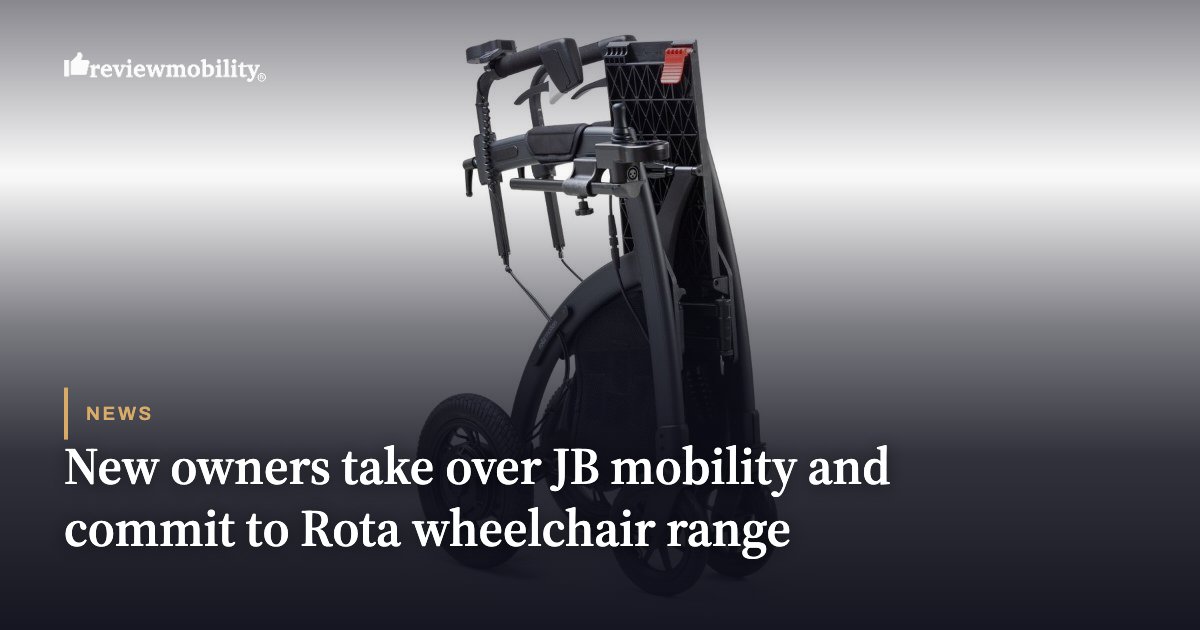
JB Mobility, formerly Delta Orthopedic, has confirmed that its County Wicklow business is now under the direction of Bob Diamond and John Cullen. The pair have committed to continuing manufacture of the custom-made Rota wheelchair portfolio, a range that has been built in Ireland for 50 years and sold across Ireland and the UK.
The Rota line was established in 1981 and has expanded considerably in recent years. Recent additions include the Rota Active, an open-frame wheelchair with a transport weight of 8kg, alongside a set of lighter manual chairs, a new active-grip silicone profile handrim, and the company’s first powered products. The firm also recently completed its transition to supplying directly to the HSE, Ireland’s public healthcare provider.
Custom-built wheelchairs occupy a very different part of the market to the folding transit chairs most people picture. A made-to-measure active chair is fitted to the user’s body dimensions, sitting position and daily activity, and the weight difference is significant. An 8kg frame is roughly half the weight of a standard self-propelled chair, which changes what a user can lift into a car boot without help.
Ownership changes among small specialist manufacturers matter to existing users, because parts availability and repair support depend on the firm staying operational. Diamond told trade press the move means continuity of supply for existing customers, and the directors have said the modernisation programme for the Rota range will carry on rather than being wound down. That is a better outcome than several recent UK and Irish sector transitions, where acquiring firms have discontinued legacy product lines.
For UK buyers, custom chairs are usually accessed either through an NHS wheelchair service assessment, which can supply or contribute a voucher toward a chair, or bought privately through a specialist dealer who takes measurements in person. Off-the-shelf chairs are far cheaper but rarely suit full-time users, and a poor fit causes pressure problems and shoulder injury over time.
Our wheelchair guide explains the differences between transit, self-propelled, active and powered chairs, and the wheelchair costs guide covers what custom and standard models actually cost in the UK. To find a supplier who fits chairs locally, use our company directory. The original story is at THIIS Magazine.
Related guides on Review Mobility
Published 22 July 2026 · Last updated 21 October 2026