
Bathrooms
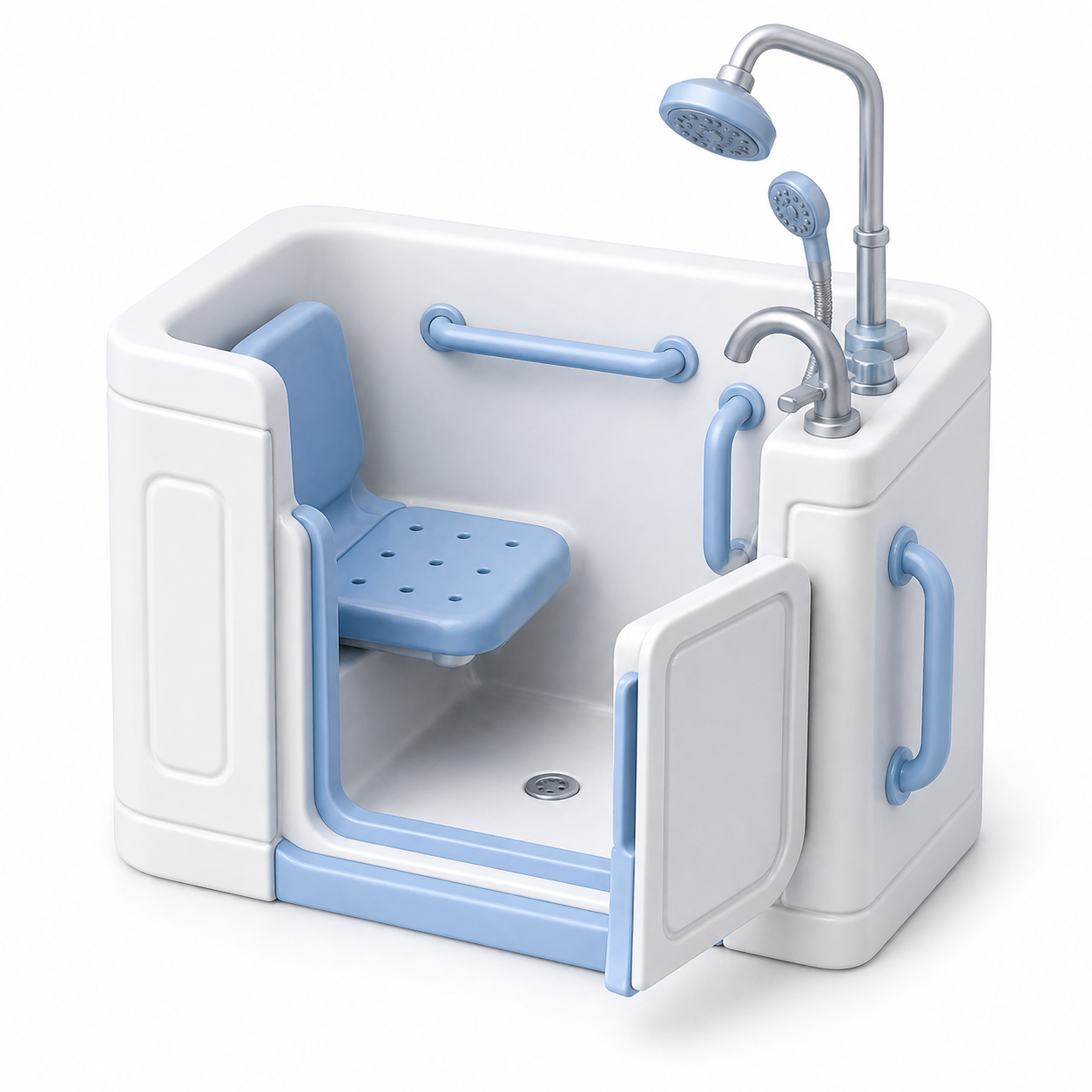
Make your bathroom safer and more accessible with our guides to grab rails, bathing aids, walk-in showers and more.
Browse Bathrooms
Explore our guides, reviews and comparisons.
Bathroom Mobility Blog Posts
Latest guides, reviews and advice.

Best Commodes UK (2026): 5 Commode Chairs Compared
read more
Best Bath Boards UK (2026): Bathing Aids Compared
read more
Best Bath Lifts UK (2026): 5 Bath Lifts Compared
read more
Best Grab Rails UK (2026): Suction and Fixed Rails Compared
read more
Best Toilet Frames UK (2026): 5 Safety Frames Compared
read more
Best Raised Toilet Seats UK (2026): 7 Picks Compared
read moreBathroom Mobility: Safe and Comfortable Bathing
The bathroom is one of the most common places for accidents in the home, particularly for older adults and those with limited mobility. Simple adaptations can make a dramatic difference, from grab rails and bath seats to full wet room conversions. The right setup helps you bathe safely, comfortably, and with dignity.
Common Bathroom Adaptations
Grab rails are one of the simplest and most effective improvements, providing support when getting in and out of the bath or using the toilet. Bath lifts lower you gently into the water and raise you back up. Shower seats and stools allow seated showering, while raised toilet seats reduce the strain of sitting down and standing up. For a more full solution, walk-in baths and wet room conversions remove the need to step over a high bath edge entirely.
Wet Rooms vs Walk-in Showers
A wet room has no shower tray or enclosure, with the entire floor gently sloped towards a drain. This gives full wheelchair access and maximum space. Walk-in showers use a low-profile tray with a small step, which can be easier to retrofit into an existing bathroom. Both options are significantly safer than a standard bath for users with mobility difficulties.
Funding Bathroom Adaptations
A Disabled Facilities Grant from your local council can cover the cost of essential bathroom adaptations, up to a maximum of £30,000 in England. An occupational therapist assessment is usually required. Some local authorities also offer smaller grants or interest-free loans for less extensive work. VAT relief applies to adaptations for disabled people.
Frequently Asked Questions
How do I get a bathroom adaptation through the council?
How much does a wet room conversion cost?
Are bath lifts easy to install?
Will bathroom adaptations affect my home value?
Top 10 Bathroom Mobility Companies
Ranked by verified customer reviews on Review Mobility. Rankings update automatically as new reviews are published. Paid placement never changes review scores.
Easy2Bathe
Easy2Bathe is a specialist bath lift provider based in Droitwich, Worcestershire, helping people with reduced mobility continue to enjoy safe, independent bathing in their…
View Profile & Reviews
Homeright Mobility Bathrooms
Homeright Mobility Bathrooms is a specialist bathroom adaptation company focused on designing and installing accessible bathrooms for people with reduced mobility, disabilities or age-related…
View Profile & Reviews
Sanitaal
Get solutions to prevent slips in the wet areas of your bathroom with the right underfoot solution. I think we all agree that baths…
View Profile & Reviews
Absolute Mobility
Absolute Mobility is a specialist in accessible bathrooms, designing and installing walk-in baths, easy-access showers and wet rooms for older and less mobile people.…
View Profile & Reviews
Age Care Bathrooms
Age Care Bathrooms is a specialist in accessible bathrooms, designing and installing walk-in baths, walk-in showers and wet rooms for older and less mobile…
View Profile & Reviews
Millbrook Healthcare
Millbrook Healthcare is one of the United Kingdom’s leading providers of community equipment services, home adaptations and technology-enabled care, with over 30 years of…
View Profile & Reviews
More Mobility
More Mobility is a mobility equipment retailer offering a range of products designed to help customers maintain their independence and enjoy a more active…
View Profile & Reviews
Orchard Mobility Centre
From our base in Horningsea near Cambridge we aim to offer a complete service to aid people in and out of the home. The…
View Profile & Reviews
Welcome Mobility
Welcome Mobility positions itself as one of Britain’s leading online retailers for disability aids and mobility equipment, offering a broad range of products at…
View Profile & Reviews
Drive DeVilbiss Healthcare
Drive DeVilbiss is one of the leading manufacturers and distributors of durable medical products in the world today, with manufacturing and distribution centres in…
View Profile & Reviews