
Published 10 March 2025 · Last updated 22 October 2026
Links to Amazon on this page are paid links: we earn a commission if you buy, at no extra cost to you. No company paid to appear here. How we make money.
Quick answer: Compression boots, also sold as air compression leg massagers, wrap the feet and calves and inflate in sequence to squeeze the legs. Many people find them relaxing for tired, heavy or aching legs. Check that the wraps fit the widest part of your calf, whether the boot covers the foot, calf or thigh, and how many pressure settings it has. They are consumer massagers, not a treatment for lymphoedema or leg ulcers, and they are not safe for everyone: do not use one without speaking to your GP if you have, or might have, a blood clot, poor arterial circulation, heart failure, a leg infection or an open wound.
Compression boots compared
These leg massagers are sold through Amazon UK, with live prices and stock from the retailer. Check each listing for the maximum calf size, whether extenders are included, and whether it has a heat setting.
| Photo | Title | Price | Buy |
|---|---|---|---|

| FIT KING Rechargeable Air Compression Recovery Boots with 5-Zone Control |

| |
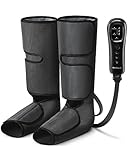
| Nekteck Leg Massager with Air Compression for Circulation and Relaxation, Foot and Calf Massage Machine with Hand-held Controller 2 Modes 3 Intensities, Adjustable Leg Wraps for Home and Office Use | £62.99 |
|

| FIT KING Leg Compression Machine with Heat for Pain and Circulation | £119.99 |
|

| ALLJOY Leg Massager for Pain and Circulation, Leg Massage with Heat | Leg Heating Pad Wrap Helping with Swelling Edema RLS, Ideal for Daily Muscle Relaxation | £89.99 |
|
As an Amazon Associate I earn from qualifying purchases. (paid link)
How to choose compression boots
Fit
Measure the widest part of your calf, and your thigh if the boots go that high. Wraps that are too tight feel uncomfortable before they even inflate, and some models sell extenders for larger legs.
Coverage
Foot and calf wraps are the most common. Full-leg boots reach the thigh and are bulkier. Choose the coverage for where you feel the discomfort.
Pressure settings and modes
Look for several intensity levels so you can start gently, and a timer that switches off automatically. Some models add heat, which some people find soothing, but heat is not suitable if you have reduced feeling in your legs.
Power and noise
Rechargeable models are easier to use in a chair without a trailing cable. Air pumps make some noise, so check reviews if you want to use it while watching television or falling asleep.
Who should not use compression boots
Speak to your GP or nurse before using compression boots if any of these apply:
- You have, or might have, a deep vein thrombosis or other blood clot.
- You have peripheral arterial disease or have been told your arterial circulation is poor.
- You have heart failure or fluid on the lungs.
- You have a leg infection, cellulitis, an open wound or fragile skin.
- You have reduced feeling in your legs, for example from diabetes, or you are pregnant.
Stop using the device and seek advice if you feel pain, numbness or tingling, or notice any change in skin colour.
What they will not do
Consumer compression boots are sold for comfort and relaxation. They are not the same as the compression garments or pneumatic compression pumps a clinician may prescribe for lymphoedema, venous leg ulcers or clot prevention. If your legs are swollen, see your GP to find out why before buying a device.
Frequently asked questions
What do compression boots do?
They inflate and deflate in sequence around the feet and legs, giving a squeezing massage. Many people use them to relax tired or aching legs.
Are compression boots safe?
For many people they are, when used as the instructions say. They are not suitable for people with blood clots, poor arterial circulation, heart failure, leg infections or open wounds. Check with your GP if you have any health condition affecting your legs.
Do compression boots help swollen ankles?
Swollen ankles have many causes, some of them serious. See your GP to find out the cause first. A massager may make legs feel more comfortable but is not a treatment for the underlying problem.
How long should I use compression boots for?
Follow the manufacturer’s guidance. Many devices run for a set session, often around 15 to 20 minutes, and switch off automatically.
Are compression boots the same as compression stockings?
No. Compression stockings apply steady graduated pressure and are often prescribed. Compression boots give a moving massage for comfort. Our compression socks guide covers stockings.
Related guides
- Best blood circulation machines for legs
- Best compression socks
- Leg elevation and compression therapy guide
- Circulation boosters: do they work?
Published 10 March 2025 · Last updated 22 October 2026