
Published 8 December 2025 · Last updated 22 October 2026
Links to Amazon on this page are paid links: we earn a commission if you buy, at no extra cost to you. No company paid to appear here. How we make money.
Quick answer: A reclining wheelchair lets the backrest lean back so the user can rest, and usually has a headrest and elevating leg rests. A tilt-in-space chair tilts the whole seat and back together instead, which keeps the hips at the same angle and helps stop the user sliding forward. For someone who sits for long periods, has poor head or trunk control, or is at risk of pressure damage, tilt-in-space is often the better choice, and it should be chosen with a seating assessment from the NHS wheelchair service. Whichever you buy, check it has anti-tip bars, because reclining moves the weight backwards.
Reclining wheelchairs compared
These chairs are sold through Amazon UK, with live prices and stock from the retailer. The list includes reclining transit chairs, a reclining self-propelled chair, a tilt-in-space transit chair and a powered reclining chair, so check the type on each listing.
| Photo | Title | Price | Buy |
|---|---|---|---|

| Reclining High Back Folding Transit Wheelchair with Head Support, U-GO Serenity Recliner Attendant Propelled Wheelchair with Headrest & Elevating Leg Rests, Recline up to 170°, Seat Width (18") | £219.99 |

|

| U-GO Esteem Deluxe Lightweight Folding Reclining Self Propelled Wheelchair with Padded Headrest, Recliner Wheelchair with Elevating Leg Rests, High Back Wheelchair for Elderly Adults, Seat Width 18" | £369.99 |
|

| U-GO Esteem Tilt in Space Transit Wheelchair, High Back Lightweight Recliner Wheel Chair, Reclining Folding Wheelchair for Adults with Removable Headrest, Mobility Aid, Seat Width (18") | £399.99 |
|
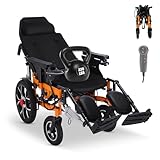
| Reclining Electric Wheelchair for Adults,20" Seat All Terrain Power Wheelchairs,Foldable Motorized Wheelchair Reclining Wheelchairs for Seniors,25 Miles Long Travel Range-Airline Approved (Orange B) | £744.98 |
|
As an Amazon Associate I earn from qualifying purchases. (paid link)
Reclining or tilt-in-space?
In a reclining chair only the backrest moves. That opens the angle at the hips, which is comfortable for resting but can make the user slide down the seat, and sliding causes shear on the skin.
In a tilt-in-space chair the seat and back tilt together as one unit. The user’s position stays the same while their weight shifts onto the back, which relieves pressure under the bottom without sliding. Many specialist chairs do both.
What to check
- Anti-tip bars. A reclined chair is much easier to tip backwards, so these are essential.
- Headrest and lateral supports, if the user needs head or trunk support.
- Elevating leg rests that raise and extend together, so the legs stay supported as the back reclines.
- Who pushes it. Most reclining chairs are attendant-propelled transit chairs with brakes on the push handles. Self-propelled versions have large rear wheels.
- Size and weight. Reclining chairs are longer and heavier than standard wheelchairs, so check doorways, turning space and whether it folds for a car.
- Seat width and depth, and the maximum user weight.
Get an assessment first
Anyone who needs a reclining or tilting chair for long periods should be assessed by the NHS wheelchair service or an occupational therapist. Posture and pressure care depend on the chair being set up for the person, and the service may provide a suitable chair or a personal wheelchair budget. Our research on NHS wheelchair waiting times shows how long that can take in each area.
Ways to pay less
- Wheelchairs can be bought without VAT by someone with a disability or long-term illness. See our VAT relief guide.
- Ask about a personal wheelchair budget if the NHS assesses you as needing a wheelchair.
- Compare typical prices in our wheelchair costs guide.
Watch: using a wheelchair
This official guide from the British Red Cross shows how to use and fold a transit wheelchair.
Frequently asked questions
What is a reclining wheelchair?
It is a wheelchair with a backrest that leans back, usually with a headrest and elevating leg rests, so the user can rest or change position without leaving the chair.
What is the difference between recline and tilt-in-space?
Recline moves only the backrest. Tilt-in-space tilts the seat and back together, keeping the hip angle the same, which helps reduce sliding and pressure under the bottom.
Are reclining wheelchairs safe?
They are when used properly. Reclining shifts the weight backwards, so the chair should have anti-tip bars, and the brakes should be on before reclining.
Can I get a reclining wheelchair on the NHS?
You may, if the NHS wheelchair service assesses you as needing one for posture or pressure care. They may provide a chair or offer a personal wheelchair budget.
Do reclining wheelchairs fold?
Some do, but they are usually bulkier and heavier than standard folding wheelchairs. Check the folded size and weight before buying if the chair needs to go in a car.
Related guides
- Best transit wheelchairs
- Best pressure relief wheelchair cushions
- Best wheelchairs for heavier people
- Best wheelchairs
Published 8 December 2025 · Last updated 22 October 2026