
Published 8 December 2025 · Last updated 25 September 2026
Choosing the best mobility scooter is one of the most important decisions you can make for your independence, and with dozens of models on sale in the UK it is easy to feel overwhelmed. To make it simpler, our editorial team compared the leading pavement, road-legal, folding and heavy-duty scooters on the specifications that actually matter day to day: real-world range, weight, comfort, user capacity and total cost of ownership. Below you will find our ranked top 10, an at-a-glance comparison table, and a plain-English buying guide so you can match a scooter to your life rather than the other way around.
The short answer: what is the best mobility scooter in the UK?
There is no single best mobility scooter, because the right one is decided by three things: your weight, whether the scooter has to travel in a car, and whether you need to use the road. Answer those and the field narrows to two or three machines.
- Best overall boot scooter: Pride Go-Go Elite Traveller LX. 125 kg limit, 7.8 mile claimed range, 15.2 kg heaviest piece.
- Best ride on poor pavement: Pride Apex Rapid. Front and rear suspension, 136 kg limit.
- Best for a heavier rider: Pride Revo 2.0. Rated to at least 170 kg, 50.8 cm seat, 12 to 18 mile range.
- Best if it lives at home: Roma Shoprider Sovereign 4. 20 mile claimed range, pneumatic tyres, padded swivel seat.
- Best for flying: Pride GoGo Carbon Ultra Lite. 13.7 kg, folds, 288 Wh battery.
- Best road-legal Class 3: Scooterpac Savvy 8, for 8 mph road use with DVLA registration.
Two rules that apply to every scooter on this page. Discount any claimed range by 20 to 30 per cent, because manufacturers publish calculated figures, not road tests. And if you are chronically sick or disabled, buy VAT-free: the relief is not means-tested, you do not need to be registered disabled, and it takes 20 per cent off. Amazon does not operate the scheme, so on most of these scooters a dealer is cheaper despite the higher list price.
Review Mobility ranking
The verdict on all ten, in one line each
Specifications last checked 3 September 2026 against each manufacturer’s own published material, and every model on this list was still on sale on that date. Next scheduled check: 1 October 2026. Review Mobility ranks on published specifications and on UK buying conditions, we do not road-test scooters, and we say so rather than implying otherwise. How we rank.
Our verdict: Still the easiest credible boot scooter to get into a car, at 15.2 kg for the heaviest piece, but Pride has withdrawn it from its current UK range, so buy it on price and spares availability, not on longevity.
- 15.2 kg heaviest piece
- 125 kg user limit
- 7.8 mi claimed (12 Ah)
Specs checked 3 Sep 2026 Spec score 5.8/10 Read the full reviewCheck price on Amazon
Our verdict: The only boot scooter here with front and rear suspension at the price, but the standard 12 Ah machine is rated 5.5 miles on Pride’s own spec sheet, the advertised 10.5 belongs to the optional battery.
- 17.75 kg heaviest piece
- 136 kg user limit
- 5.5 mi claimed (12 Ah)
Specs checked 3 Sep 2026 Spec score 5.5/10 Read the full reviewCheck price on Amazon
Our verdict: The one to buy if the scooter lives at home: 20 claimed miles and pneumatic tyres on real pavement. Roma publishes no component weights, and the heaviest piece is quoted anywhere from 19 kg to 25 kg.
- 19–25 kg heaviest piece, unpublished
- 136 kg user limit
- 20 mi claimed
Specs checked 3 Sep 2026 Spec score 6.7/10 Read the full reviewCheck price on Amazon
Our verdict: The only scooter on this page that publishes range at a stated test load, and the pick above 21 stone, but design to Pride’s own 170 kg brochure figure rather than the 181 kg on its product page.
- 25.85 kg heaviest piece
- 170 kg user limit (brochure)
- 14.8 mi at 181 kg
Specs checked 3 Sep 2026 Spec score 6.4/10 Read the full reviewCheck price on Amazon
Our verdict: The cheapest genuinely road-legal 8 mph machine from a British manufacturer with its own plant and dealer network. At 135 kg it does not dismantle, so it needs a scooter store, a ramp or a vehicle hoist.
- 135 kg, does not dismantle
- 180 kg user limit
- 28 mi claimed
Specs checked 3 Sep 2026 Read our write-upCheck price on Amazon
Our verdict: At 13.7 kg and 288 Wh it clears airline rules with the least argument of anything here, and it is the one pick where the Amazon price beats a VAT-relieved dealer. Pride’s own page states three different ranges.
- 13.7 kg, folds whole
- 120 kg user limit
- 9.3 mi (Pride’s spec table)
Specs checked 3 Sep 2026 Spec score 4.7/10 Read the full reviewCheck price on Amazon
Our verdict: Twelve kilograms without the battery makes this the lightest working scooter on the list. No suspension, 5-inch solid tyres and an 8-degree climb limit make it the scooter you take away with you, not the one you use daily.
- 12 kg without battery
- 120 kg user limit
- 9 mi claimed
Specs checked 3 Sep 2026 Read our write-upCheck price on Amazon
Our verdict: A claimed 40 miles and a heated seat and backrest as standard, paid for with 147 kg of lead-acid and a 12-degree gradient limit that is lower than the cheaper Savvy 8’s.
- 147 kg, does not dismantle
- 178 kg user limit
- 40 mi claimed
Specs checked 3 Sep 2026 Read our write-upCheck price on Amazon
Our verdict: Under £600 for a five-part dismantling boot scooter built by Drive DeVilbiss. It has no headlight, only reflectors, and its published user weight varies by 21 kg depending on which seller you read.
- Dismantles into 5 parts
- 115–136 kg quoted, confirm in writing
- 10–11 mi claimed
Specs checked 3 Sep 2026 Read our write-upCheck price on Amazon
Our verdict: The cheapest way into a folding scooter, and by some distance the least documented: Green Power publishes no weight, no dimensions and no suspension specification, and quotes two different battery capacities.
- Weight not published
- 121 kg user limit
- 15 mi claimed, not plausible
Specs checked 3 Sep 2026 Read our write-upCheck price on Amazon
Amazon links on this page are paid links: if you buy through one, Review Mobility earns a commission at no extra cost to you. Prices are shown live by Amazon and are never typed in by us. On several of these models a dealer offering VAT relief will beat the Amazon price, and we say which, model by model, below.
Where a manufacturer publishes two conflicting figures we use the more conservative one and explain the conflict in the full review. That happens more often than it should: on four of the five scooters we have reviewed in full we found a documented contradiction in the manufacturer’s own material.
The five reviewed scooters, scored on their published specifications
Five of the ten picks above have a full Review Mobility review, and those five are scored here on a fixed formula built from the manufacturers’ own published specifications. Review Mobility has not driven these scooters: this is a specification score, not a road test, and the method is set out underneath the table.
| Scooter | Spec score | Heaviest piece to lift | Claimed range as standard | Max user weight | Turning radius | Ground clearance and suspension | Amazon |
|---|---|---|---|---|---|---|---|
| 1Roma Shoprider Sovereign 4Distance on one charge | 6.7 | 25 kg4.019 kg or 25 kg by source; we score 25 | 20 mi10.0no test conditions published | 136 kg5.3 | 115 cm7.9 | 7.5 cm6.0none fitted | Check price |
| 2Pride Revo 2.0Heavier riders and long trips | 6.4 | 25.85 kg3.7heaviest section | 17.8 mi8.9declared at a 91 kg test load | 170 kg8.9brochure 170 kg, page 181 kg; we score 170 | 132 cm5.5 | 3.17 cm5.7Comfort-Trac front and rear | Check price |
| 3Pride Go-Go Elite Traveller LXDismantling into a car boot | 5.8 | 15.2 kg7.9heaviest of 5 pieces | 7.8 mi3.912 Ah standard pack | 125 kg4.1 | 112 cm8.3 | 6.35 cm4.8not published | Check price |
| 4Pride Apex RapidRough pavements on a budget | 5.5 | 17.75 kg6.9front section | 5.5 mi2.812 Ah standard pack | 136 kg5.3 | 121.9 cm6.9 | 3.6 cm6.1Comfort-Trac front and rear | Check price |
| 5Pride GoGo Carbon Ultra LiteFlying and one-handed lifting | 4.7 | 15.7 kg7.7folds whole; 13.7 kg dry plus batteries | 9.3 mi4.7spec-table figure, not the 15-mile prose claim | 120 kg3.5 | 130 cm5.8 | 2.5 cm1.0none fitted | Check price |
Swipe the table sideways to see every column.
Specifications checked 26 August 2026 against each manufacturer’s own published material. Amazon links are paid links: we may earn a commission if you buy, at no extra cost to you. No price is shown here because prices change; the buttons open the live listing.
How we score: the method in full
What the score is. A weighted average of five measurements every one of these manufacturers publishes, marked out of ten on fixed scales that do not move when a new scooter is added. Portability counts for 25 per cent, claimed range 25, maximum user weight 15, turning radius 15, and ground clearance with suspension 20.
What the score is not. It is not a test result. Which? drives scooters up a measured hill at Brooklands and scores what happens; we do not, and a number derived from a spec sheet cannot tell you how a scooter rides. Comfort, build quality, dealer support and battery life in real use are absent from this table because no manufacturer publishes them in a form that can be compared.
The least-favourable-figure rule. Where a manufacturer’s own material states two different numbers for the same thing, we score the one least flattering to the scooter. Pride publishes the Revo 2.0’s weight limit as 181 kg on its product page and 170.09 kg in its brochure, so we score 170. The Sovereign 4’s heaviest dismantled piece is given as 19 kg by one source and 25 kg by another, so we score 25. Buyers who plan around the least favourable figure are never caught out; buyers who plan around the best one sometimes are.
Standard configuration only. Range is scored on the battery the scooter ships with, not the upgrade. The Apex Rapid scores on 5.5 miles because that is the 12 Ah figure; its advertised 10.5 miles belongs to an optional 18 Ah pack. Only the Revo 2.0 publishes range at a declared test load, which makes it the one figure here with a stated basis rather than an implied one.
Unpublished means unscored. A feature a manufacturer does not publish earns nothing. Roma publishes no component weights for the Sovereign 4 and no suspension, so it scores on the figures that exist.
Why the ranking looks like this. The composite describes a general-purpose buyer. A scooter built to be lifted into a boot will always lose range and ground clearance to one built to stay on the pavement, and the biggest machine here tops the table while being the one you cannot lift alone. Read the column that matches your situation before you read the total.
Every scooter in this year’s top 10 is a model you can order today, from a brand with a UK presence, and each pick carries a live price so you can see what it actually costs right now rather than what it cost when we wrote this. Models sold only through dealers are covered separately further down, because they are still worth knowing about even though you cannot buy them online.
Best mobility scooters compared
Every model in our top 10, side by side. Swipe or scroll the table sideways on a phone to see all columns.
| # | Model | Best for | Class | Top speed | Range (claimed) | Weight | Max user | Specs checked |
|---|---|---|---|---|---|---|---|---|
| 1 | Pride Go-Go Elite Traveller LX | Best overall | 2 | 4 mph | 6 to 9.75 mi | 35.8 kg (no batteries) | 19 st 9 lb (125 kg) | 3 Sep 2026 |
| 2 | Pride Apex Rapid | Best ride quality | 2 | 4 mph | 5.5 mi (12 Ah standard), 10.5 mi with the optional 18 Ah | 41 kg (no batteries) | 21 st 6 lb (136 kg) | 3 Sep 2026 |
| 3 | Roma Shoprider Sovereign 4 | Best mid-size pavement | 2 | 4 mph | up to 20 mi claimed | 82 kg | 21 st (136 kg) | 3 Sep 2026 |
| 4 | Pride Revo 2.0 | Best for larger users | 2 | 4 mph | up to 17 mi claimed | about 82 kg with batteries | 170 kg brochure / 181 kg product page | 3 Sep 2026 |
| 5 | Scooterpac Savvy 8 | Best road-legal | 3 | 8 mph | up to 28 mi claimed | 135 kg | 28 st 4 lb (180 kg) | 3 Sep 2026 |
| 6 | Pride GoGo Carbon Ultra Lite | Lightest to lift | 2 | 4 mph | 9.3 mi (Pride’s own table) | 13.7 kg without batteries | 18 st 9 lb (120 kg) | 3 Sep 2026 |
| 7 | Monarch Genie Ultralight | Best for travel | 2 | 4 mph | up to 9 mi (18 with a second battery) | 12 kg without battery, 14 kg with | 19 st (120 kg) | 3 Sep 2026 |
| 8 | Scooterpac Ignite | Best long range | 3 | 8 mph | up to 40 mi claimed | 147 kg | 28 st (178 kg) | 3 Sep 2026 |
| 9 | Livewell Pavement 4mph | Best budget | 2 | 4 mph | 10 to 11 mi claimed | about 38 to 41 kg | quoted 18 to 21 st, confirm before buying | 3 Sep 2026 |
| 10 | Green Power Super Lightweight Folding | Cheapest folder | 2 | 4 mph | 15 mi claimed, treat with caution | not published by the maker | 19 st (121 kg) | 3 Sep 2026 |
A word on those range figures. Every one is the manufacturer’s own laboratory claim, and only Pride publishes the test weight it used. Assume 20 to 30 percent less in real UK conditions with hills, cold weather and a heavier rider. Weights are quoted the way each maker quotes them, and Pride states its scooter weights without batteries, so add roughly 9 to 14 kg on the travel models and about 23 kg on the Revo.
Live prices for all ten:






As an Amazon Associate I earn from qualifying purchases. (paid link)
Free tools: find the right scooter for you
Not sure where to start? Our free interactive toolkit turns the guidance above into a personalised answer. Match yourself to a model, sanity-check real-world range, estimate the 5-year cost, or settle the Class 2 versus Class 3 question. You can also open the standalone scooter finder to bookmark or share.
The 10 best mobility scooters in the UK
1. Pride Go-Go Elite Traveller LX: best overall boot scooter
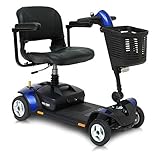
The Elite Traveller LX is the scooter we point most people towards first. It comes apart into five pieces with the heaviest at 15.2 kg, which is genuinely liftable by one person of average strength, and the solid non-scuffing tyres mean no punctures and no marks on shop floors. Behind it sits the largest dealer, parts and servicing network of any brand here, which matters far more on year three than on day one.
Two honest caveats. There is no wheel suspension, only a sprung seat post, so broken pavement is felt. And the range: several retailers advertise 12 miles, but Pride’s own published figures for this platform are 6 miles on the standard 12 Ah batteries and 9.75 miles on the 18 Ah pack. Plan around the lower number.
| Photo | Title | Price | Buy |
|---|---|---|---|
|
| Pride Mobility Go-Go Elite Traveller LX – 4 Wheel Mobility Electric for Adult (Blue) | £1,099.00 |
|
As an Amazon Associate I earn from qualifying purchases. (paid link)
Pride’s own specifications, the 125 kg weight limit, why two different scooters are sold as the “Go-Go LX”, and the cheapest way to buy one.
Paid link. We earn a commission at no extra cost to you, and it does not affect the ranking.
2. Pride Apex Rapid: best ride quality in a boot scooter
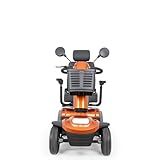
Independent front and rear suspension on a scooter that still dismantles for the car boot is rare, and it is the reason the Apex Rapid keeps turning up in owner recommendations. The 136 kg user limit is generous for a portable, the feather-touch catches make it quick to take apart, and the heaviest section is around 16.6 kg.
The compromise is that the battery pack is a separate lump of roughly 12 kg, so loading the car is two awkward lifts rather than one, and a full charge takes about eleven hours. Ground clearance is only 3.4 cm, so this is a smooth-pavement machine, not a kerb-hopper.
| Photo | Title | Price | Buy |
|---|---|---|---|
|
| Pride Mobility Apex Rapid Mobility Scooter – Compact Travel Power Scooter – Portable Mobility Scooter for Adults (Orange) | £1,199.00 |
|
As an Amazon Associate I earn from qualifying purchases. (paid link)
what the suspension is really worth, why the advertised 11-mile range belongs to the optional battery, and the weights we do not believe.
Paid link. We earn a commission at no extra cost to you, and it does not affect the ranking.
3. Roma Shoprider Sovereign 4: best mid-size pavement scooter
If the scooter is going to live in a shed or garage rather than a car boot, the Sovereign 4 is the sensible buy. Two 34 to 36 Ah batteries give it one of the longest credible ranges in the 4 mph class, the 10 inch pneumatic tyres soak up paving slabs far better than the small solid wheels on travel scooters, and front and rear lights are fitted as standard. It is built by Roma Medical in Bridgend and listed on the Motability Scheme, so parts and servicing are properly supported.
It has no suspension and only 7.5 cm of ground clearance, so kerbs still register. And although retailers say it dismantles, at 82 kg with no published section weights this is realistically a scooter you ramp or hoist, not one you lift.
| Photo | Title | Price | Buy |
|---|---|---|---|
|
| Roma Shoprider Sovereign 4 Electric Mobility Scooter – Detachable and Adjustable Swivel Seat – 4 Wheel Travel Mobility Vehicle | £1,499.00 |
|
As an Amazon Associate I earn from qualifying purchases. (paid link)
Roma’s own specifications, the width contradiction between its page and its manual, and why the same scooter sells from £1,312 to £2,095.
Paid link. We earn a commission at no extra cost to you, and it does not affect the ranking.
4. Pride Revo 2.0: best for larger users and rough pavement
The Revo 2.0 is the one to look at if you are over about 20 stone or your local pavements are in poor condition. It carries a 181 kg user limit, Comfort-Trac suspension front and rear, 9 inch wheels and 35 Ah batteries, and Pride publishes its range against a stated test load, 17.8 miles at 200 lb falling to 14.8 miles at 400 lb, which is more honesty than almost any rival offers.
It is big. Around 82 kg with batteries and a 25.9 kg front section means a hoist or a second pair of hands for transport. Owners also mention a small footplate and a fiddly seat rotation lever, though the same reviews are overwhelmingly positive about how it handles in shop aisles.
| Photo | Title | Price | Buy |
|---|---|---|---|
|
| Pride Mobility Revo 2.0 Mobility Scooter – Lightweight 4 Wheel Electric Scooters for Adult (Blue) | £1,649.99 |
|
As an Amazon Associate I earn from qualifying purchases. (paid link)
Pride’s range measured at two rider weights, the 170 kg versus 181 kg limit contradiction, and what to buy if you need more capacity.
Paid link. We earn a commission at no extra cost to you, and it does not affect the ranking.
5. Scooterpac Savvy 8: best road-legal Class 3
For road use you need a Class 3 machine, and the Savvy 8 is the best value one you can order online today. All-round suspension, 12 inch pneumatic tyres, full LED lighting with indicators, a 600 W motor and a 15 degree gradient limit is a strong specification for around two thousand pounds. Scooterpac is a genuine British manufacturer with its own plant in Lowestoft and a real dealer network, not a drop-shipper.
The batteries are lead-acid with on-board charging only, so you cannot bring them indoors, and expect to replace them every 12 to 18 months with daily use. At 135 kg it needs a scooter store, a ramp or a vehicle hoist.
| Photo | Title | Price | Buy |
|---|---|---|---|
|
| Savvy 8 Mobility Scooter – 8mph Road Legal Electric Scooter with 28 Mile Range, 600W Motor, Pneumatic Tyres, Electromagnetic Brakes, 28 Stone Weight Capacity | £1,999.00 |
|
As an Amazon Associate I earn from qualifying purchases. (paid link)
6. Pride GoGo Carbon Ultra Lite: lightest to lift, best for flying
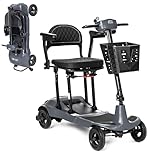
At 13.7 kg with a carbon fibre frame, this is the only scooter here that a person of average strength can lift into a boot in one piece. It folds to 69 by 55 by 44 cm, roughly a large suitcase, and the two lithium batteries weigh 1 kg each and lift out individually, which is what makes it realistic for flights and cruises. Clear it with the airline in advance regardless.
Worth knowing before you spend: Pride’s marketing copy says 15 miles while Pride’s own specification table on the same page says 9.3 miles. Budget for the lower figure. Ground clearance is 25 mm with a 57.5 mm obstacle limit and no suspension, so this is an airport and shopping centre scooter, not a British pavement scooter.
| Photo | Title | Price | Buy |
|---|---|---|---|
|
| Pride GoGo Carbon Ultra Lite Folding Mobility Scooter, Lightweight, Portable | £2,499.00 |
|
As an Amazon Associate I earn from qualifying purchases. (paid link)
what British Airways, easyJet, Jet2 and Ryanair actually require, why the 100 Wh battery limit does not apply, and the range error on Pride’s own page.
Paid link. We earn a commission at no extra cost to you, and it does not affect the ranking.
7. Monarch Genie Ultralight: best for cruises, coaches and holidays
Twelve kilograms is about as light as a working scooter gets, achieved with magnesium alloy and carbon fibre rather than marketing. The 10 Ah lithium battery lifts out and charges on or off board, Monarch states it is airline and cruise approved, and unusually for this end of the market it comes with a two year warranty and Motability approval from a company trading since 2001.
There is no suspension and the tyres are 5 inch solids, so on kerbs and paving slabs the ride is hard work. The 8 degree gradient limit rules out steep hills. Think of it as the scooter you take away with you, not the one you use every day.
| Photo | Title | Price | Buy |
|---|---|---|---|
|
| Genie Ultralight – 12kg Lightweight Portable Pavement Folding Mobility Scooter for Seniors & Adults | 4mph Speed, 9 Mile Range | Everyday Use (Black) | £1,589.00 |
|
As an Amazon Associate I earn from qualifying purchases. (paid link)
8. Scooterpac Ignite: best long range, and the only heated seat
If you actually cover distance, the Ignite is built for it: a 1400 W motor, two 100 Ah batteries, 14 inch pneumatic front tyres, ultra-soft suspension all round and a claimed 40 miles. The heated seat and backrest are standard rather than an option, which for winter riding in the UK is worth more than most spec-sheet features.
All that capacity is lead-acid, which is why it weighs 147 kg, and the range figure will fall noticeably as the batteries age. A lithium conversion is available at extra cost. Note also that its 12 degree gradient limit is lower than the cheaper Savvy 8, which matters if you live somewhere hilly.
| Photo | Title | Price | Buy |
|---|---|---|---|
|
| Ignite Mobility Scooter – Long Range 40 Miles, Heated Seat, 8mph Top Speed, 178kg Capacity, Rear Wheel Drive, Luxury Mobility Scooter for Adults | £3,199.00 |
|
As an Amazon Associate I earn from qualifying purchases. (paid link)
9. Livewell Pavement 4mph: best budget boot scooter
Under six hundred pounds for a five-section dismantling boot scooter with a 96 cm turning circle is good value, and the machine itself is sourced from Drive DeVilbiss, one of the largest mobility manufacturers in the world. Solid puncture-proof tyres and both on-board and off-board charging remove two common ownership headaches, and buyers regularly report loading it into a car single handed.
Be clear-eyed about the limits. There is no headlight, only reflectors, so it is a daylight scooter as supplied. There is no suspension and only 4.8 cm of clearance at the rear. And the published user weight varies between 115 kg and 136 kg depending on which seller you read, so confirm it in writing. Livewell’s own direct site has closed, so check who handles the warranty before you buy.
| Photo | Title | Price | Buy |
|---|---|---|---|
|
| Livewell Pavement 4mph Mobility Scooter (Blue) | £565.00 |
|
As an Amazon Associate I earn from qualifying purchases. (paid link)
10. Green Power Super Lightweight Folding: cheapest way into a folding scooter
At around £489 this is the cheapest route to a folding boot scooter from a seller with a UK presence, and owners consistently praise how fast it folds, how little setup it needs and the USB port and LED light at the price. The batteries lift out, which makes the fold-and-lift job easier.
The documentation is the problem. Green Power does not publish a weight, dimensions or a suspension specification, quotes 12 Ah in one place and 20 Ah in another, and the 15 mile range claim is not plausible from a 24 V 12 Ah lead-acid pack when Pride quotes 6 to 10 miles from similar batteries. The battery is sealed lead-acid, not lithium, so treat the airline-approved claim with real caution. Owners also report it struggles on hills and on anything but flat ground.
| Photo | Title | Price | Buy |
|---|---|---|---|
|
| Green Power Super Lightweight Electric Boot Mobility Scooter Easy Folding, USB Port LED Light | £489.00 |
|
As an Amazon Associate I earn from qualifying purchases. (paid link)
If you need more than 28 stone capacity
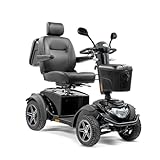
Nothing in the top 10 goes beyond 181 kg, so if you are over about 28 stone the ranking above will not serve you. The one genuinely bariatric scooter you can order online is the Scooterpac Ignite Grande, rated to 210 kg or 33 stone, with a claimed 45 mile range, 14 inch front and 16 inch rear pneumatic tyres and a heated captain’s seat. It is expensive and it is large, 1.7 m long and 77 cm wide, which makes it awkward in shops and lifts, so measure your storage and your usual routes before you commit.
| Photo | Title | Price | Buy |
|---|---|---|---|
| Ignite Grande Scooter – 8mph Road-Legal Class 3, Heated Seat, Heavy-Duty Suspension, 40-Mile Range, 210kg Weight Capacity | £4,499.00 |
|
As an Amazon Associate I earn from qualifying purchases. (paid link)
A note on marketplace-only brands
Search for a mobility scooter online and you will find plenty of models at £400 to £700 from brands you have never heard of, often with impressive-sounding range and weight figures. We left them out deliberately. Several publish no top speed at all, which means you cannot tell whether they are legal on a UK pavement; several quote a different maximum user weight in different countries for the same machine; and almost none have a UK dealer, spare parts supply or anyone to call when something breaks in year two. A mobility scooter is not a gadget. If it stops working you stop going out, so who services it matters more than the headline price.
Models you can only buy through a dealer
Some of the best known scooters in the UK are not sold online at all. Pride’s Colt Sport, Colt Deluxe 2.0 and Maxima, the Shoprider Traveso, the Monarch Storm+ and most folding models from Welzo and similar brands are supplied through mobility dealers who deliver the machine, set it up for you and service it afterwards. If you want a Class 3 road scooter or you are not certain what suits you, that is usually the better way to buy, and it is why we have kept them out of the ranking above rather than pretending you can add them to a basket.
Two things a dealer gives you that a marketplace cannot. The first is a home assessment and a proper fitting, which is how you find out that the seat height is wrong or that your front door is 5 cm too narrow before you have paid. The second is VAT relief: most dealers can supply a scooter at 0% VAT if you have a long-term illness or disability, which on a £1,500 machine is worth around £300. Online listings are normally VAT inclusive with no relief, so compare the real prices rather than the headline ones.
Not sure which class or size suits you? Try the Scooter Finder first, then read our guides to Class 3 road-legal scooters and folding scooters for travel. If you would rather talk to someone local, our directory of UK mobility suppliers lists dealers with genuine customer reviews.
How to choose the right mobility scooter
The best scooter for you is rarely the fastest or the most expensive; it is the one that fits your routine, your storage and your body. Work through five questions and the shortlist narrows quickly.
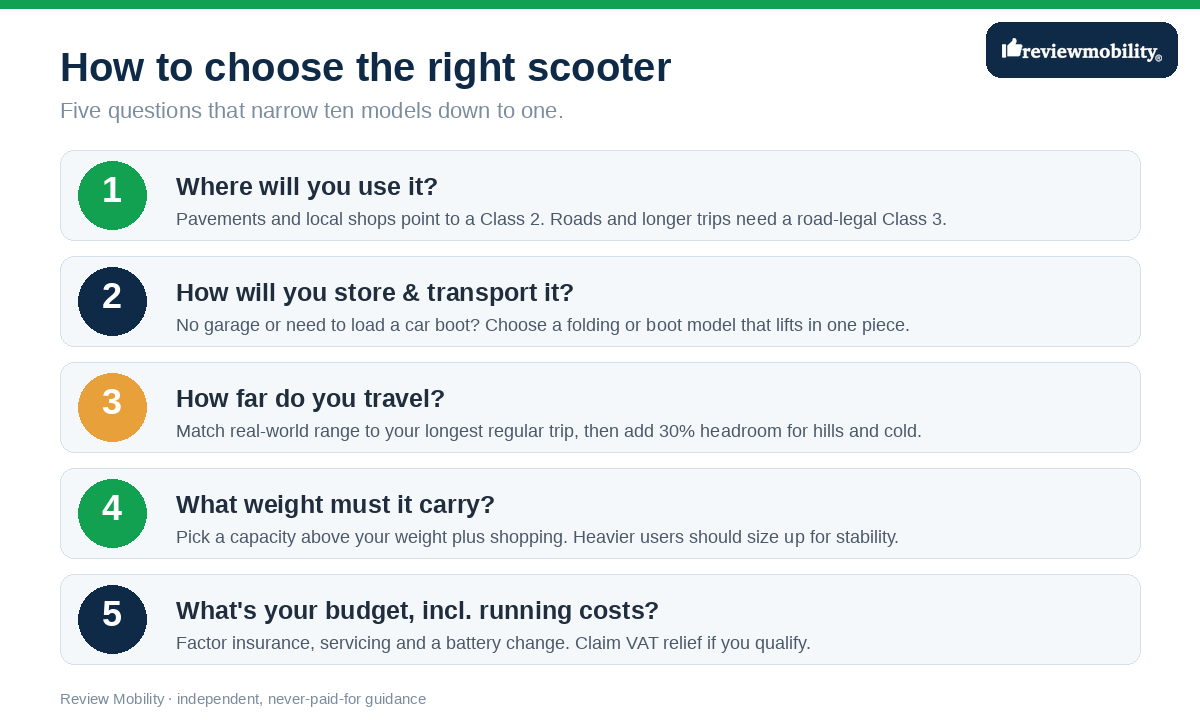
Start with where you will use it. Pavements and local shops point you to a nimble Class 2, while roads and longer trips need a road-legal Class 3. Next, think about storage and transport: if you have no garage or need to load a car boot, a folding or boot model that lifts in one piece will get far more use than a heavier machine that stays parked. Then match real-world range to your longest regular trip and add some headroom for hills and cold weather, which both eat into battery life. Finally, size the weight capacity above your own weight plus shopping, and set a budget that includes the running costs we cover below.
Class 2 versus Class 3: which type do you need?
UK mobility scooters fall into two legal classes, and the difference decides where you can legally travel. Class 2 scooters are limited to 4 mph and are meant for pavements and pedestrian areas. They are compact, need no DVLA registration and are the most popular choice for everyday local use. Class 3 scooters reach 8 mph, are road-legal, and must be registered with the DVLA, though no test or driving licence is required and the minimum age is 14. Class 3 models are heavier and carry lights, indicators and a horn as standard.
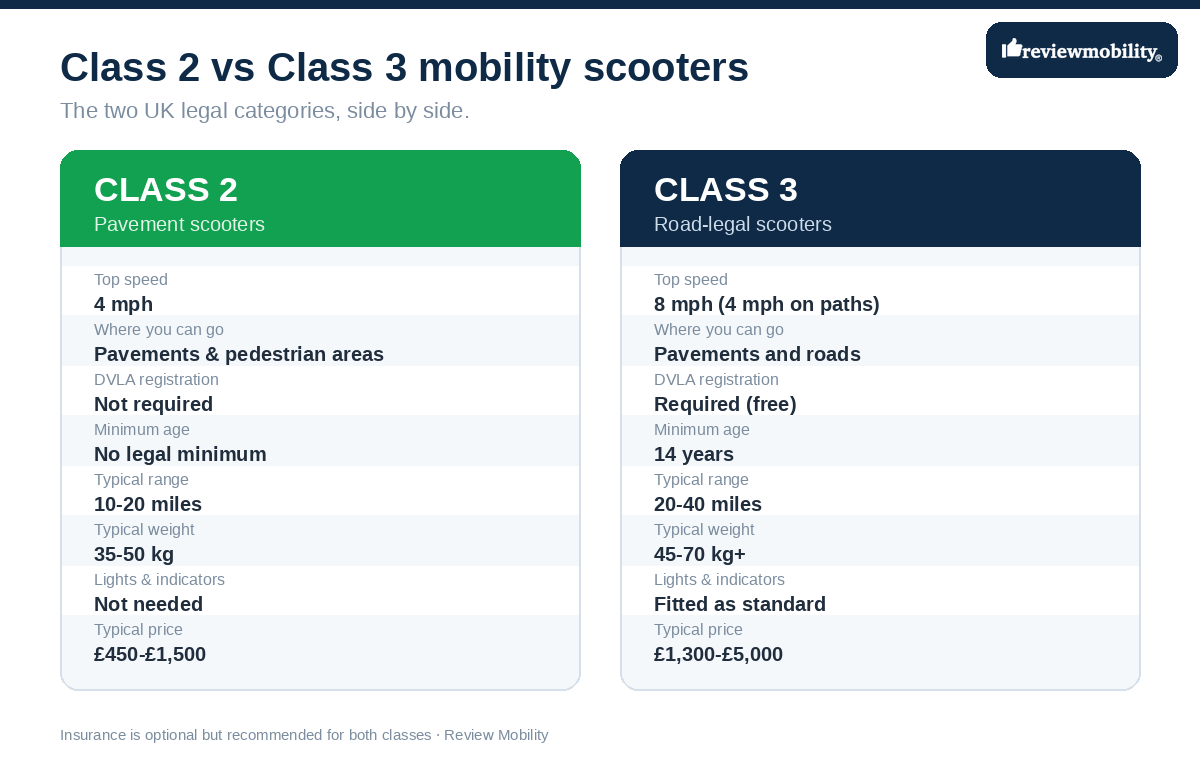
Insurance is not a legal requirement for either class, but it is inexpensive, usually £30 to £80 a year, and we strongly recommend it for the third-party, theft and accident cover it provides. You can read more in our guide to mobility scooter insurance.
Best for everyday pavement use
For most people a reliable Class 2 pavement scooter is the ideal everyday choice. Prioritise a tight turning circle, responsive steering and good ground clearance for the occasional kerb, plus a basket big enough to bring the shopping home in one trip. Comfort matters more the longer you ride, so look for a padded, supportive seat, adjustable armrests and at least basic suspension. The Roma Shoprider Sovereign 4 and the Livewell Pavement above are the ones to look at here.
Best for longer journeys and road use
If you want to travel beyond your immediate neighbourhood, a Class 3 road-legal scooter like the Scooterpac Savvy 8 is the answer. Look for a genuine 25 to 30 miles of range, good suspension and air-filled tyres for comfort over distance, and a seat you can happily sit in for a few hours. Remember that quoted ranges are optimistic; budget for 20 to 30 percent less in real conditions with hills, cold and a heavier rider.
Best folding and travel scooters
A mobility issue should not stop you exploring. Folding scooters collapse into a shape that fits most car boots and can go on cruises and many flights with advance arrangement. The single most important number for travel is not range or speed but lift weight, the heaviest piece you have to raise into a vehicle. The chart below ranks the folding models on exactly that.
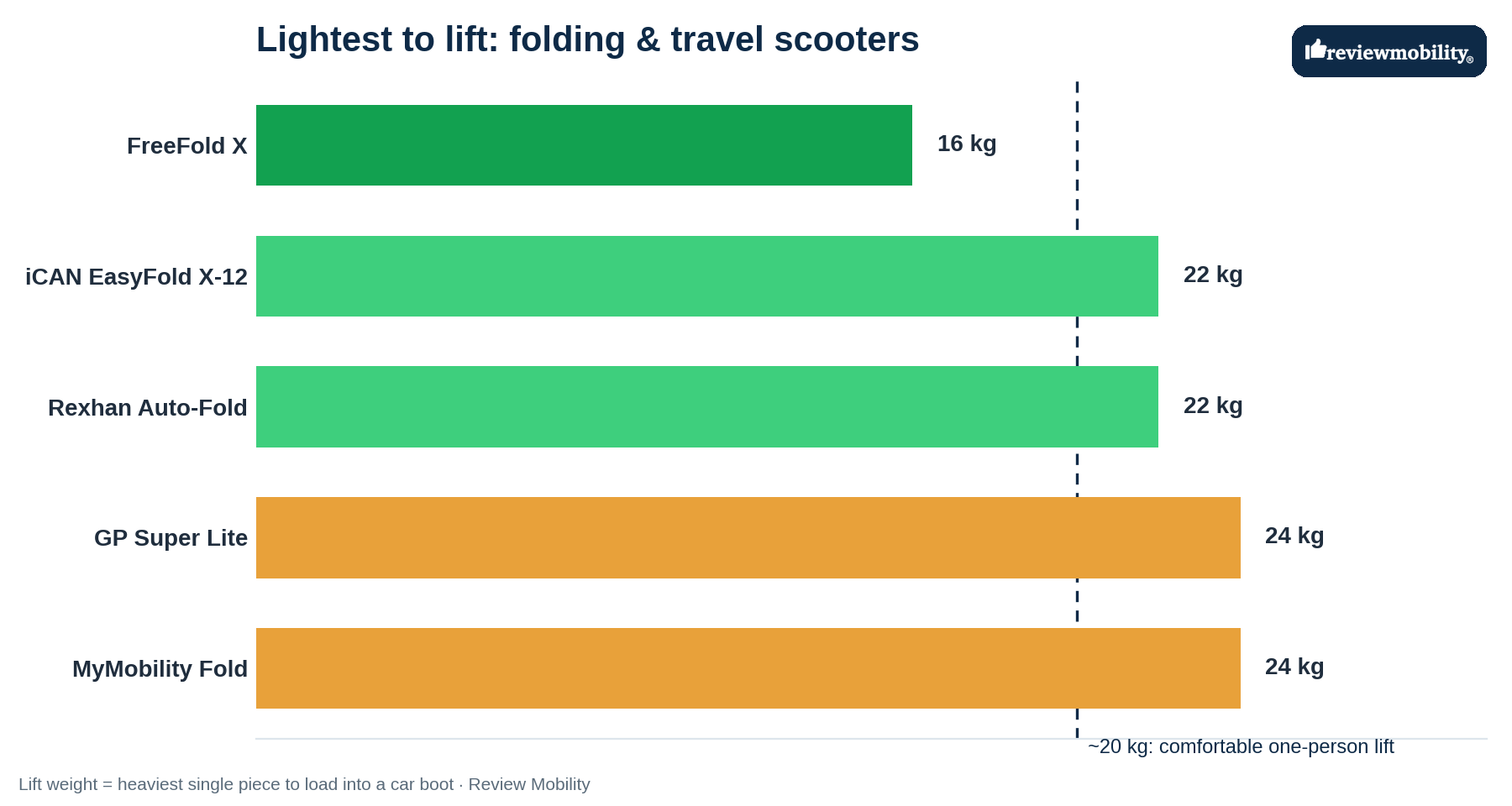
Always check airline policy well in advance, as lithium battery rules vary. Most UK and European carriers accept sealed batteries within set limits, and many ask for 48 hours notice. Our folding scooter guide covers the practicalities in detail.
Key features that matter most
Battery range and charging
Range is the headline figure, but treat manufacturer claims as a best case. A scooter quoted at 20 miles may realistically deliver 15 to 17 in everyday use. Charging time matters too: a 4 to 6 hour charge is far more convenient than 8 to 10 hours if you ride daily, and a removable battery lets you charge indoors while the scooter stays in the garage. Compare options in our mobility scooter batteries guide.
Weight capacity and comfort
Choose a model rated for your weight plus a margin. Running a scooter near its limit wears components faster, cuts range and affects braking and stability. Most Class 2 scooters carry 100 to 120 kg and Class 3 models 120 to 227 kg. Beyond the seat padding, the seat height, the footplate position and backrest length all decide whether you are comfortable after an hour.
Suspension and tyres
Solid tyres never puncture and need no maintenance but pass every bump to you; air-filled tyres are far more comfortable but need occasional pressure checks. For daily pavement use solid tyres are fine; for rougher ground or longer rides, pneumatic tyres and proper suspension make a real difference. The best motor and drivetrain matter too, which we cover in the mobility scooter motors guide.
Best mobility scooters under £800 and under £1,000
Two budgets come up more than any others, and it is worth being clear about what each one actually buys. A Class 2 pavement scooter typically sells for £450 to £1,600 in the UK, so both budgets sit inside that band. A Class 3 road-legal machine starts at roughly £1,300 and runs to £4,500, which puts it out of reach of both.
Under £800 is entry-level Class 2 territory: a lightweight folding or dismantling scooter intended for short local trips, pavements and shopping centres. Our budget pick, the Livewell Pavement 4mph, sits under £600. At this level, check the published user weight limit before anything else, because it is the specification most often quoted two different ways, and treat quoted ranges as laboratory figures rather than what you will see on a British pavement.
Under £1,000 opens up better batteries, tyres and seating rather than a different class of machine. It is also the budget where a dealer-refurbished scooter usually beats a new one: we have seen refurbished travel scooters from about £595 and mid-size models such as the Roma Shoprider Sovereign 4 from about £1,195, with a warranty attached. The thing to check on any refurbished machine is the batteries, which are the usual hidden cost.
Two things can bring either budget further down. Most buyers with a qualifying condition are exempt from VAT, which can save £100 to £200 on the same model, and the Motability scheme lets many people lease a scooter with servicing and insurance included.
What a mobility scooter really costs
The purchase price is only part of the picture. Over five years you should also budget for insurance, a battery replacement and routine servicing. The chart below shows a realistic total for four typical scooter types, so you can plan properly rather than be surprised later.
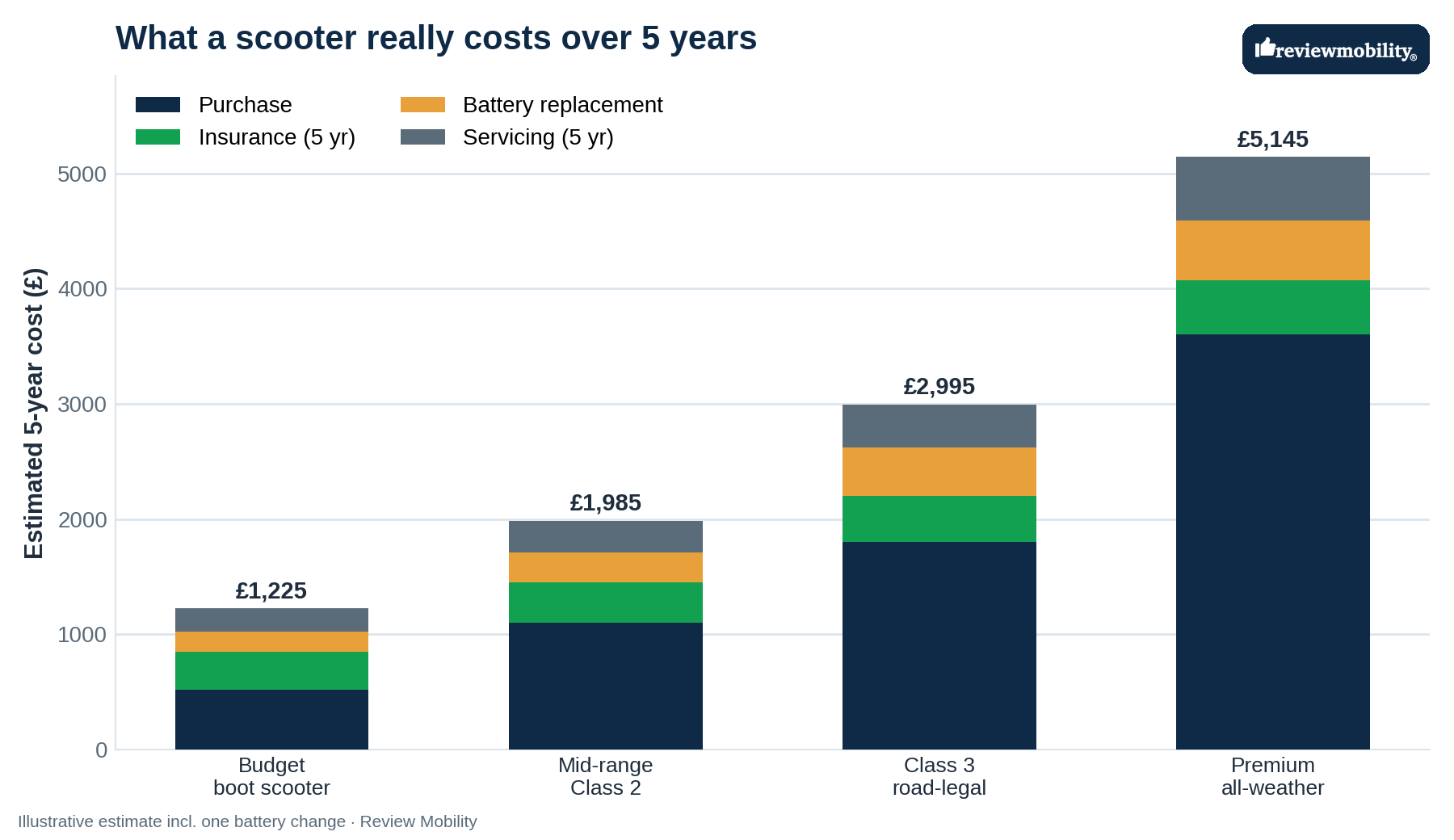
Two things can bring the total down. Most buyers with a qualifying condition are exempt from VAT, which can save £100 to £200 on the same model, and the Motability scheme lets many people lease a scooter, with servicing and insurance included, using a qualifying allowance.
Safety and UK regulations
Class 2 scooters stay on pavements and pedestrian areas and need no registration, though you should respect any local restrictions. Class 3 scooters must be registered with the DVLA, a simple free process your retailer can help with, and can use roads as well as pavements. You do not need a licence or test, but you must be at least 14. Before each trip, check the battery charge, seat and brakes, stow loose items, and avoid using the scooter in high winds or heavy rain, which reduce stability and visibility.
Where to buy and try before you commit
A specialist showroom lets you sit on different scooters, operate the controls and get honest advice, often with delivery, setup and local servicing included. Online retailers can be cheaper and offer more choice, but you cannot test first, so check the returns policy and what delivery includes. Wherever you buy, a home trial is invaluable, and taking your doorway and storage measurements along means you can be sure your chosen model actually fits. You can compare local mobility companies and read reviews on Review Mobility.
Will it fit in your car boot?
Usually not the way the advert implies. Across every combination we could verify, no dismantling scooter on this page fits a measured boot with the rear seats up, the base section keeps the chassis’s full length. The folding GoGo Carbon Ultra Lite is the only pick that verifiably fits all six measured cars seats-up, and the Genie Ultralight manages the Ford Puma and Volvo XC40 lying sideways.
See the full boot-fit matrix, ten scooters against the manufacturers’ own boot measurements for six of the UK’s best-selling cars, including the Ford Puma, Nissan Qashqai and VW Golf.
Best mobility scooter for your situation
Most people arrive here with a specific constraint rather than a general question. This table routes you straight to the answer.
| If your priority is | Our pick | Why |
|---|---|---|
| Carrying a heavier rider | Pride Revo 2.0 | Rated to at least 170 kg with a 50.8 cm seat and full suspension. Above about 27 stone you need a bariatric machine such as the Pride Maxima (226 kg) or TGA Breeze S4 MAX (248 kg) |
| Lifting it into a car alone | Pride GoGo Carbon Ultra Lite | 13.7 kg and folds whole. The next lightest here has a 15.2 kg heaviest piece plus a separate battery box |
| Flying or cruising | Pride GoGo Carbon Ultra Lite | 288 Wh, under the 300 Wh ceiling airlines apply to mobility aids, and folds under the 81 cm hold-door limit Jet2 sets |
| Broken or uneven pavement | Pride Apex Rapid | Front and rear suspension on 8-inch wheels in a boot-scooter format. The Revo 2.0 is the alternative if you also need capacity |
| Range, and it lives at home | Roma Shoprider Sovereign 4 | 34 Ah batteries against the 12 Ah a travel scooter carries, plus pneumatic tyres and a padded swivel seat |
| Using the road at 8 mph | Scooterpac Savvy 8 | The only Class 3 machine in our top ten. Requires DVLA registration, lights, indicators, a horn and a rear-view mirror |
| Spending as little as possible | Livewell Pavement 4mph | Our budget pick. A dealer refurbished Sovereign 4 from about £1,195 is often better value than a new budget scooter |
| Tight indoor spaces | A three-wheel model | A three-wheel Revo turns in 102 cm against 132 cm for the four-wheel. You lose lateral stability and about two miles of range |
How we choose the scooters on this page
Our method is deliberately unglamorous, and we would rather tell you what it is than claim a testing programme we do not run.
- Specifications come from the manufacturer, not the retailer. Every figure on this page is taken from a manufacturer specification sheet, brochure or owner’s manual, and we date the fetch. UK retailer spec tables are wrong often enough that we treat them as unusable: on a single scooter we found six different published range figures and two different weight limits.
- We record contradictions rather than resolving them silently. Where a manufacturer’s own page disagrees with its own PDF, we quote both and say which we would plan around. That happened on four of the five models we reviewed in depth.
- Claimed ranges get discounted. Manufacturers publish theoretical figures calculated from battery and drive-system specifications, usually to ANSI/RESNA and ISO 7176-4. We plan on 20 to 30 per cent less.
- Brand support counts more than price. We favour manufacturers with a UK dealer network, published manuals and available spares, because the expensive failures on a scooter are the transaxle and the batteries, and both need someone local.
- Every pick has to be buyable. An earlier version of this page recommended nine models that turned out to be dealer-only, which is useless if you want to order one. The current top ten are all stocked on Amazon UK, and we check the listings are live before publishing.
- We say when the evidence is thin. On two models here we could find almost no independent owner feedback. We say so rather than writing a plausible-sounding complaints section.
We earn commission if you buy through the Amazon links on this page, and it does not affect the order. We do not accept payment for placement, and we tell you on several models that a dealer with VAT relief is cheaper than the Amazon listing we link to.
Watch: using a mobility scooter safely
This road-safety film from Nottinghamshire County Council covers using a mobility scooter safely on pavements and roads.
Frequently asked questions
What is the best mobility scooter to buy in the UK?
For most people we recommend the Pride Go-Go Elite Traveller LX as the best all-round choice, because it comes apart into sections one person can lift, runs on puncture-proof tyres and is backed by the largest dealer and servicing network in the UK. If budget is the priority, the Livewell Pavement 4mph is good value at under £600, and for travel the 13.7 kg Pride GoGo Carbon Ultra Lite is the easiest to lift.
How much does a mobility scooter cost?
Class 2 pavement scooters typically cost £450 to £1,500, while Class 3 road-legal models run from about £1,300 to £5,000 depending on features and build. Premium enclosed models cost more. If you qualify for VAT relief or the Motability scheme, your out-of-pocket cost can be much lower.
Are 3-wheel or 4-wheel scooters better?
Three-wheel scooters have a tighter turning circle and more legroom, which suits indoor and tight pavement use. Four-wheel scooters are more stable, especially at speed, on cambers and for heavier users, so they are the safer choice for road use and rougher ground.
Can I use a mobility scooter on the road?
Only Class 3 scooters are road-legal, with an 8 mph limit and DVLA registration. Class 2 scooters are restricted to pavements and pedestrian areas at 4 mph.
Do I need insurance for a mobility scooter?
It is not a legal requirement, but it is strongly recommended. Cover typically costs £30 to £80 a year and protects against third-party claims, theft and accidental damage.
How long does a mobility scooter battery last?
On a charge, expect a realistic 12 to 30 miles depending on the model. As a component, a battery typically lasts 18 months to 3 years, and lithium packs longer. Replacements usually cost £200 to £500.
Can I take a mobility scooter on a plane?
Many airlines accept folding scooters, but policies vary, especially on lithium batteries. Contact your airline well in advance, as most require around 48 hours notice and proof the battery meets their limits.
Which mobility scooter is best for a heavy person?
Up to about 26 stone, the Pride Revo 2.0 is the strongest mainstream choice: it is rated to at least 170 kg, has a 50.8 cm seat and full suspension, and it is the only scooter here whose maker publishes range at two different rider weights. Above that you need a bariatric machine, and the practical UK ceiling is around 39 stone with models such as the Pride Maxima (226.75 kg) and the TGA Breeze S4 MAX (248 kg), at roughly £3,400 to £5,000. Remember the limit covers you plus anything you carry.
What is the lightest mobility scooter you can buy in the UK?
Among mainstream models the Pride GoGo Carbon Ultra Lite is the lightest we would recommend, at 13.7 kg without its batteries, folding rather than dismantling. The trade-offs are a 120 kg user limit, 25 mm of ground clearance and a price around double a conventional folder.
Is it cheaper to buy a mobility scooter on Amazon or from a dealer?
It depends whether you qualify for VAT relief. A Class 2 scooter is zero-rated for a chronically sick or disabled buyer purchasing for personal or domestic use, and Amazon does not operate the scheme. On most models here a dealer with relief applied undercuts the Amazon price despite a higher list price. If you do not qualify, Amazon is often cheaper. Either way, dealer prices for an identical machine vary enormously, and we found spreads of 60 per cent on two of these scooters, so get three quotes.
Do I need a licence or DVLA registration for a mobility scooter?
No licence is needed for either class. Class 2 scooters, capped at 4 mph, need no registration, no vehicle tax and no compulsory insurance. Class 3 scooters, which do 8 mph and may be driven on the road, must be registered with the DVLA. Registration is free and there is no MOT, no plates and no road tax. The minimum age for a Class 3 is 14.
How far can a mobility scooter really go on one charge?
Less than the number on the box. Manufacturers publish theoretical ranges calculated from battery and drive-system specifications rather than road tests, usually to ANSI/RESNA and ISO 7176-4. Rider weight, hills, cold weather, tyre pressure and battery age all reduce it, and lead-acid batteries lose capacity from the day they are made. We plan on 20 to 30 per cent below the claim, and halve that again for a there-and-back trip.
What is the best mobility scooter for rough or uneven ground?
For broken pavement, the Pride Apex Rapid or the Revo 2.0, both of which have front and rear suspension. Be clear about the distinction though: suspension absorbs uneven surfaces, it does not give you ground clearance. Both of those scooters sit lower than a plain boot scooter, so for grass, gravel or high kerbs you need a Class 3 machine with proper clearance rather than a suspended Class 2.
How long do mobility scooter batteries last, and what do they cost?
Sealed lead-acid batteries, which most scooters here use, typically need replacing every 12 to 24 months depending on use and how well they are kept charged. Replacements are commonly £55 to £120 each and are always fitted in matched pairs: putting a new battery alongside an old one is a common cause of charging faults. Leaving a pack flat for months will kill it. Lithium packs last longer but cost considerably more.
Can I get a mobility scooter through Motability?
Some models are available through the Motability Scheme, including the Roma Shoprider Sovereign 4 and the Pride Revo 2.0. You lease rather than buy, using the higher rate mobility component of your benefit. Advance payments vary by model and change, so ask a Motability dealer for the current figure rather than relying on a published price.
Should I buy a used or refurbished mobility scooter?
A dealer refurbished scooter with a warranty is often better value than a new budget machine, and we have seen good examples from about £595 for a travel scooter and £1,195 for a mid-size one. The thing to check is the batteries, which are the usual hidden cost and may already be near the end of their life. Buy from a dealer who states the condition and gives at least three months, rather than privately.
Published 8 December 2025 · Last updated 25 September 2026