
Logo of "reviewmobility®" in white lowercase letters on a black background, featuring a thumbs-up icon to the left of the text.

Daily Living Aids: Practical Products for Independent Living

Daily living aids are simple, practical products designed to help people with limited mobility, arthritis, reduced grip strength, or other conditions carry out everyday tasks more easily and safely. From adapted cutlery and jar openers to dressing aids and grabbers, these products can make a meaningful difference to independence at home.

This guide covers the main categories of daily living aids available in the UK, what they cost, and where to find them.

Disclaimer* Please note that some of this page’s links are affiliate links. Meaning if you click on them, we receive a small commission.

Kitchen and Eating Aids

Adapted Cutlery

Adapted cutlery features thicker, cushioned handles, angled heads, or weighted designs to help people with arthritis, tremors, or weak grip eat more comfortably. Some sets include built-up handles that are easier to hold, while others have bendable shafts to accommodate limited wrist movement.

Typical cost: £5 to £25 for a set.

Non-Spill Beakers and Adapted Plates

Non-spill beakers have lids with small drinking openings and weighted bases to prevent tipping. Adapted plates often have raised edges or suction bases to stop food sliding off the plate. These are particularly helpful for people with tremors or limited hand control.

Typical cost: £5 to £20 each.

Bottle, Tin, and Jar Openers

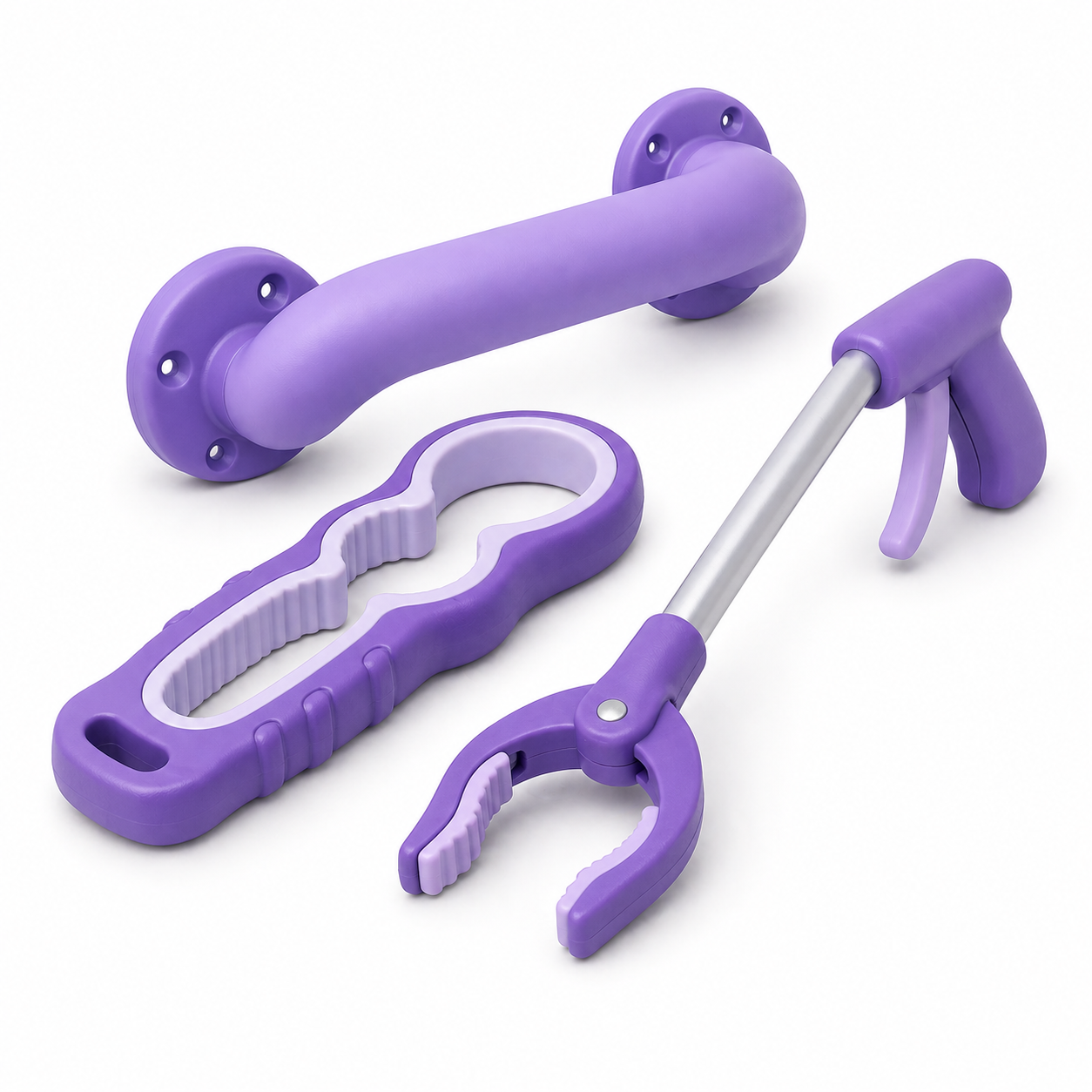
Electric and manual jar openers, ring-pull tin openers, and bottle cap grippers take the strain out of opening containers for people with weak hands or painful joints. Electric models can open most standard jars with one touch.

Typical cost: £5 to £25.

Kitchen Trolleys

Wheeled kitchen trolleys let you move food, drinks, and plates from the worktop to the table without carrying anything. They are especially useful for people who use walking frames or have limited arm strength.

Typical cost: £30 to £100.

Dressing Aids

Dressing aids help people who struggle with buttons, zips, socks, or shoes due to limited reach, stiff joints, or reduced grip:

  • Button hooks and zip pulls let you fasten clothing with one hand or with limited dexterity. Cost: £3 to £10.
  • Sock aids help you pull on socks without bending down. Cost: £5 to £15.
  • Long-handled shoe horns reduce the need to bend. Cost: £5 to £15.
  • Elastic shoelaces turn lace-up shoes into slip-ons. Cost: £3 to £8.

Reaching and Gripping Aids

Handy Grabbers (Reachers)

Grabbers are lightweight extending tools that let you pick up items from the floor, reach high shelves, or retrieve things without bending or stretching. Most have a trigger grip and a rubberised jaw for a secure hold. They are one of the most popular and versatile daily living aids.

Typical cost: £5 to £15.

Key Turners and Tap Turners

Key turners provide a larger handle to make turning keys easier for people with weak grip. Tap turners fit over cross-head taps to give a wider turning surface.

Typical cost: £3 to £12.

Comfort and Support Aids

Over-Chair Tables

Adjustable tables that slide over a chair or sofa, providing a flat surface for eating, reading, using a laptop, or doing puzzles. Most have lockable castors and a tilting top.

Typical cost: £30 to £150.

Cushions and Supports

Pressure-relief cushions, lumbar supports, and seat raisers help people sit more comfortably and reduce pain. Lift cushions can assist with standing up from a chair.

Typical cost: £15 to £80.

Health and Wellbeing Aids

  • Pill organisers help you manage daily medication with compartments for each day or time of day. Cost: £3 to £20.
  • Joint supports (knee, wrist, elbow braces) provide compression and stability for painful joints. Cost: £8 to £30.
  • Foot circulation boosters use electrical muscle stimulation to improve blood flow in the feet and lower legs. Cost: £50 to £200.

Sensory and Communication Aids

  • Magnifiers (handheld, stand-mounted, or electronic) help people with reduced vision read small text, labels, and instructions. Cost: £5 to £100+.
  • Amplified telephones have louder ringtones, larger buttons, and adjustable volume for people with hearing loss. Cost: £20 to £80.
  • Talking clocks and vibrating alarms announce the time at the press of a button or wake you with vibration rather than sound. Cost: £10 to £40.

Daily Living Aids at a Glance

CategoryExamplesTypical Cost
Kitchen aidsAdapted cutlery, jar openers, trolleys£5 – £100
Dressing aidsButton hooks, sock aids, shoe horns£3 – £15
Reaching aidsGrabbers, key turners, tap turners£3 – £15
Comfort aidsOver-chair tables, cushions, seat raisers£15 – £150
Health aidsPill organisers, joint supports£3 – £200
Sensory aidsMagnifiers, amplified phones, talking clocks£5 – £100+

Where to Buy Daily Living Aids

Daily living aids are widely available from specialist mobility shops, pharmacies, and online retailers. Some of the most common sources include Amazon, NRS Healthcare, Argos, and local mobility shops. Many items also qualify for VAT relief if purchased by or for a person with a chronic illness or disability.

Your local NHS occupational therapist may also be able to provide some aids free of charge following an assessment.

Daily Living Aids FAQs

What are daily living aids?
Daily living aids are practical tools and products designed to help people with disabilities, reduced mobility, or age-related conditions carry out everyday tasks such as eating, dressing, bathing, and moving around the home.

Can I get daily living aids on the NHS?
Yes. An occupational therapist can assess your needs and may provide certain aids free of charge, such as grab rails, bath boards, and dressing aids. Ask your GP for a referral.

Do daily living aids qualify for VAT relief?
Yes. Products designed for use by people with a chronic illness or disability are zero-rated for VAT. You will usually need to sign a declaration at the point of purchase.

Where can I try daily living aids before buying?
Many local Disabled Living Centres and mobility shops have display areas where you can try products before purchasing. Your occupational therapist may also bring samples to a home assessment.

Best Joint Supports

Best Joint Supports

Drive DeVilbiss Folding Walking StickAdjustable Height, Folding Design, Lightweight£17.68Buy Now...

Daily Living Aids Frequently Asked Questions

What are daily living aids?

Help may be useful if you have problems with ADLs, including getting in and out of bed or a chair, cooking, drinking, dressing, sitting comfortably, moving about the house, or eating.

What are different mobility aids?

There are many different types of mobility aids. This can be anything from a walking stick to a walking frame. A mobility aid is a device which provides you support or assistance with completing tasks.